
Whether or not political inclinations drive your interest, whether or not innocence of a child drives your interest, whether or not theism drives your interest, Hamid is a film for you.
There hardly exist films that have the ability to draw close literally everyone, despite not being commercially produced or served up with blatant narratives of love, filthy richness, or nothing even close to reality.
I don’t say this because Hamid got well received or hugely viewed but watching that film didn’t make me lose attention or empathy for any of it’s characters, just like director Aijaz Khan intended.
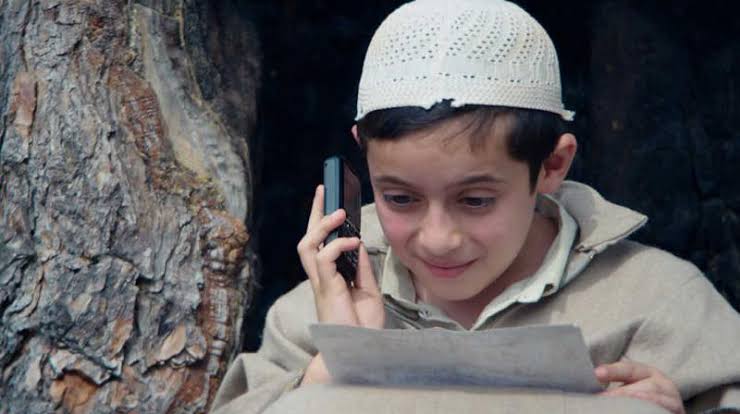
Hamid is the story of a little kid called Hamid (Talha Arshad Reshi), a resident of Indian occupied Kashmir whose father Rehmat Ali (Sumit Kaul) is missing like so many other residents of Kashmir who are assumed probably dead. But this little kid doesn’t know how to meddle in political innuendos and hence looks out for every hearsay that comes his way, ultimately concluding that 786 is Allah’s phone number and this desperate effort at finding his father, leads him to Col Abhay (Vikas Kumar) of the Indian Army who among everything else is a borderline islamophobe but develops a beautiful relationship with Hamid.
Many political narratives like Islamophobia, lives in Kashmir, unheard voices of Kashmir, dilemma that the Indian Army is stuck in, and others are subtly and strongly shown in the film.
All these narratives reminded me of the time post 370 was revoked and a video surfaced on the internet where a man spoke at length about how finally Kashmiris won’t be feeding on stuff for free, and how that is going to make them independent and respect the country. The film made me wonder how easy it is for an outsider to pass comments on the living situation of a land where the special status is all people had amongst the constant patrolling of the army, struggles being muslim dominated and constant questions raised on their faith and allegiance.
Nevertheless, the film does get a bit too politically correct at times.
Getting away for the unintended bureaucratic tone that this review just took for a while, let’s just take a while to appreciate Rasika Duggal’s effortless transformation into a muslim kashmiri woman as Hamid’s mother Ishrat Ali. Her portrayal of a restless wife struggling to make amends and look after her son, is pure and eccentric.
The concept of Allah or theism in general is so beautifully dealt with, especially how Hamid never forgets to put his cap on, before dialling Allah’s number. Kids and their innocence can turn into a visibly real wish granting factory and it is heartbreaking to see little Hamid come to terms with the reality by the end of the film.
The film reminds me of Haider along with prompting me of the lack of films (or govt efforts) on such topics.
My key takeaways from Hamid would be representations of what is behind the Azaadi that Kashmiris seek and what constitutes it, their miserable ordeals that get overshadowed by the place’s immense beauty and all the power dynamics that surrounds it, and a small kid stuck within all this but who only seeks his father’s presence.
Even though I didn’t mean to get this review political, this is what I’d like to end it with: It almost sounds like a joke now that the government seeks to capture PoK as well when the already acquired territory isn’t quite manageable.

 The F Word