Coming To America: Mainstream and fun at the expense of responsible representation and creativity

It’s Black History Month and there’s no better time to re-watch Coming To America, an 80s classic by John Landis. It is a classic from various aspects be it story, direction, the longstanding stereotype of how romantic comedies should turn out like, and a white man reinforcing stereotypes in the name of representing black culture.

When African Prince Akeem (Eddie Murphy) turns 21, he faces the proposition of getting married to a woman chosen by his family who was made aware of this predicament since her birth. In order to challenge tradition, he pledges to find a woman on his own, one who doesn’t live and breathe for his money or his approval. To fulfill his wish, he heads to America and ends up falling in love with Lisa (Shari Headly), a New Yorker running her father’s eatery in Queens.
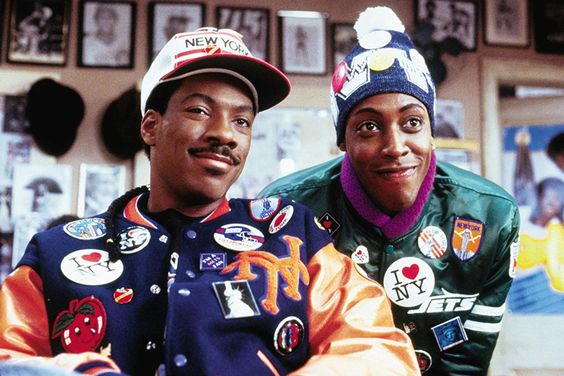
Eddie Murphy and Arsenio Hall in a still from Coming to America, embodying the ‘regular American’ look.

The film doesn’t even try to break any expected turn of events one might think of upon reading the description of the film. There is a perpetual test for the female protagonist to remain selfless and unbothered by Akeem’s financial status. She eventually passes the test and gets to be the queen of Zamunda.

The film came out in 1988 and there were a select few films back in the day (even today) that were helmed by an all black ensemble, making them the focal point of the story. However, all the characters in the film can be broadly categorized into two sections: Hoarders of black stereotype or the complete opposite resembling the definition of ‘normal’ as per White American norms. There is no in between.

Related Read: City of God: Book to film adaptation of Brazil’s world of crime from the 70s

One might think this is because Landis is white and essentially leads the story, but would this conclusion be so bad? Not if you spot a visible lack of responsible representation. The film opens from Zamunda, yet all accents are American, even Akeem’s who has never been to America.

On the upside, the film comments on America and the kind of space it creates for people of color. But almost like a self-fulfilling prophecy, Coming To America ends up becoming part of the problem it strives to eradicate or comment on.

Performances are decent. Samuel L Jackson has a minor role in the film, only to make Akeem shine as the hero. There is a rich anti-hero, a rich hero who doesn’t disclose his richness to her potential wife, a best friend at the hero’s disposal, a female protagonist who is supposed to be opinionated but only on lines of what the hero desires. Mix all this and you get a classic romantic comedy with a touch of social commentary.

Since it is the Black History Month, I will be taking up films that resonate with black representation and analyze them as to how successfully they complement their intentions.
The Trial of the Chicago 7: An insightful peek into one of the most historical trials

Set in Chicago, the film essays the tale of the Chicago 7, a group of seven radical left protestors who were on trial for allegedly inciting riots by public indictment.  At the Democratic Convention planned for August 1968 in Chicago, protestors were to gather in solidarity with those affected as a result of the Vietnam War and to oppose the American Military involvement. 

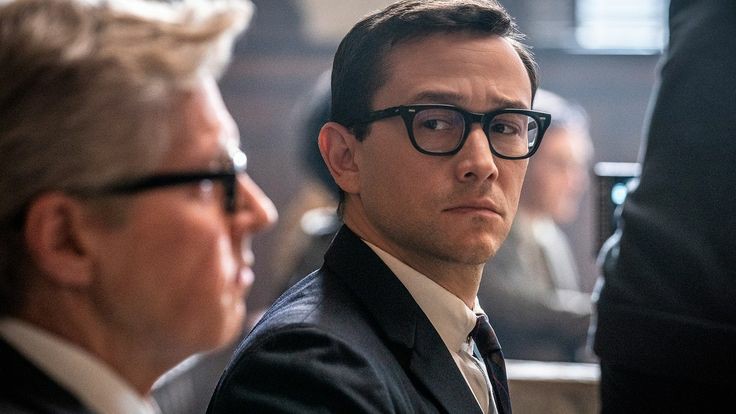
Joseph Gordon-Levitt plays the attorney who fights for the police but his visible denial of what he is fighting for is quite enlightening.

The key motive however was to elect a new presidential nominee for the Democratic Party. This led a politically motivated disagreement between the protestors and the Chicago Police. The people at the center stage of this were the Chicago 7. Some key members of the group were Tom Hayden and Abbie Hoffmann. Apart from the seven, leader of the Black Panther Party, Bobby Seale was also falsely drawn in. 

If the technical aspects are forgotten for a minute, the film is nothing but a cinematic representation of a case that brought forth the the drawbacks of law and order. Through the Chicago 7, the film serves us with perspectives of all kinds.  There even are sequences that showcase a rift amongst people on the same side, and give us in insight into the several different motivations why one would choose to be a part of a revolution. 

We aren’t going to jail for what we did, but for who we are

– Abbie Hoffman

Undoubtedly, every single actor who is part of the ensemble plays a terrific role. Even the characters that we come to hate, do an amazing job. But to single out a few, Sacha Boren Cohen as Hoffman, Eddie Redmayne as Tom Hayden and Mark Rylance as the Chicago 7’s lawyer William Kunstler shine out.  

It’s safe to argue that Cohen’s role as a high and comical member of the group isn’t something new. But as it develops and unfolds, there is so much more to it than what appears on the surface. When he coins the term ‘political trial’ to denote the evident discrimination by the law, for the first time in the film he sets stage for the narrative. 

 Judge Hoffman is an evidently racist and politically conservative character. Frank Langella essays this role with utmost diligence and perfection. 

On the surface, it might appear to be a left leaning film. But as it proceeds and puts forth the problems of every institution of society, it starts making sense. 

Director Aaron Sorkin keeps the viewers gripped into his hands all throughout. It’s a 130 mins long film but times really flies. When the issue at hand is relevant enough, makers often compromise with the flow. But even in terms of pace, the film doesn’t disappoint.

One of the members of the Chicago 7 maintains a list of people who have died in the Vietnam War ever since their trial began. The list reaches to 5000 by the climax. This subtle but strong narrative makes up for immense introspection

For anyone who doesn’t know about the case, there should’ve been a better layout. Since it’s a global release, this detail becomes even more important. Not just in terms of entertainment, but also in terms of education, this is an important film.

City of God: Book to film adaptation of Brazil’s world of crime from the 70s

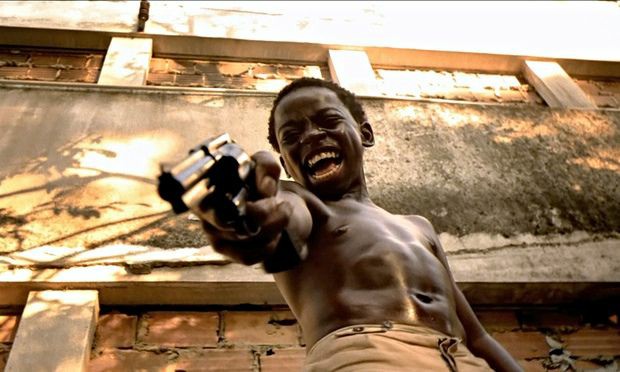
When one sits down to watch City of God, it’s best to do it without any prior inhibitions. When assumptions are left behind, that’s when the experience becomes real. Directors Fernando Meirelles and Kátia Lund aim to put across the most real depiction possible and they don’t waste time in making that clear. Since the first minute, City of God breathes of realism and sets stage for an immersive, nerve-wrecking experience. 

The most terrifying reality for anyone to come across is portrayed in the rawest form possible

Set in an actual favela, the film pans around the lives of Rocket, Li’l Dice, Benny and Knockout Ned among others. The film depicts the timeline of 60s and 70s. How a black-hispanic community neglected by authorities and police protection, apart from basic life amenities falls prey to coke smuggling, mass shootings and hands completely drenched in various crimes, is what the film portrays. In the entire ruckus, the only person who remains untouched is Rocket, a budding photographer who pounces on the opportunity to use his skill in favor of his village. 

So many reflections come to mind with each shot and frame of this film. It is a commentary on the system that fails people and later holds them accountable for their state. It also talks about the role of media in drawing attention to important issues; issues that lack self-interest for the system, a humanitarian crisis ignored most conveniently. In a sequence from the 60s, Rocket talks to his friend by the lake when he is asked what he desires to become. He says, “Not a hood or a policeman coz I’m afraid of getting shot”. This simple instance where he equates an illegal and a legal work, is when the audience first comes to terms with the fear of death. 

Knockout Ned is an interesting character in the film who gains prominence in the narrative towards the late half of the film. Like most hoods in this part of Brazil, he also gets his hands drenched on the premise of revenge that Rocket later quotes as “Swift revenge became an all out war”. From random shootouts to unexpectedly inhumane sequences, every inch of the film is aimed at making us think long and hard. 

This can also remind one of the US prison boom that is mass constituted of black people. The country here is Brazil but the negligence of marginalized poverty stricken places is quite in sync with the US. This could also symbolically represent how the 70s might have been the base ground for the immigration crisis and prison boom in developed countries. 

To many, the film might look superficial and ‘exaggerated for cinema’, but in actuality it is a book adaptation taken up by screenwriter Bráulio Mantovani. The book is written by Paul Lins and is a semi-autobiographical novel that was hailed for its writing and vividness. 

Downton Abbey: A fitting ode to the six season long British series

For anyone who has always observed or has been inquisitive of the stark difference between how a film and a series is shot, will get their interest intensified with Downton Abbey, the cinematic climax to the long running British Drama Downton Abbey. The show ended on a happy note for everyone, with all the characters either matched with their significant others, or handed estates or regained positions of power. 

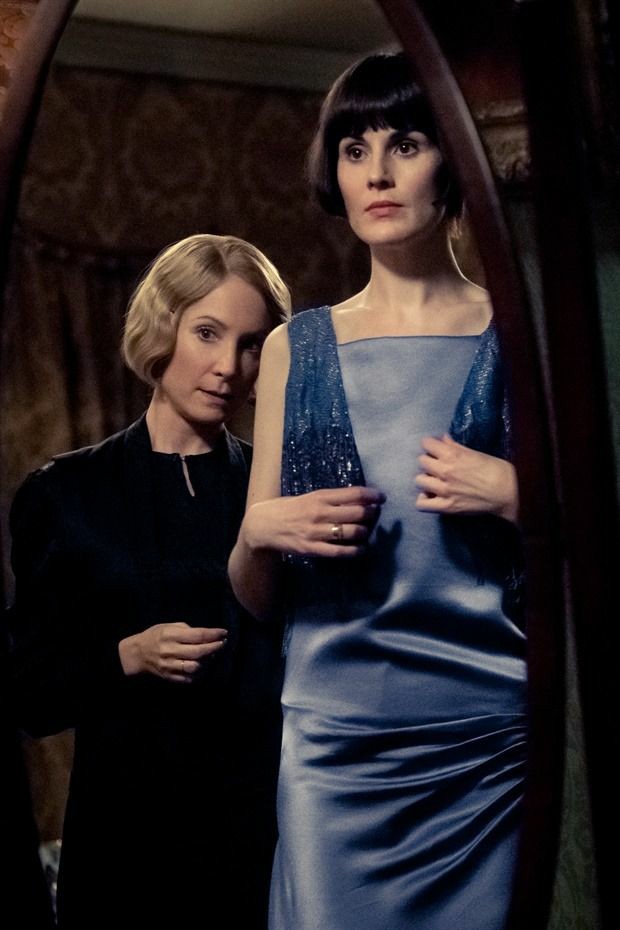
Despite everything, Downton Abbey is a visual treat to the eyes four years after the show ended.

Set in Yorkshire County, the film continues from where the show had stopped. Downton Abbey is the house of Crawleys. Now that both daughters Mary Talbot and Edith Pelham are married and have begun their own lives, their father Robert Crawley awaits to become heir to their distant cousin’s estate. King George V and Queen Mary are to visit Downton and that had spurred excitement both upstairs and downstairs. This is when scandal says hello to the family yet again. 

The film begins like a fairytale and for lovers of the show, it was nothing less than that. To hear the key music of the show played as the film sets stage, will bring out numerous memories. Director Michael Engler has tried to refurbish the adaptation with as much cinematic elements as possible with heavy use of establishing shots and camera movements in a way that it excites the audience to see what lies ahead. But to his discomfort, writer Julian Fellows who also wrote and produced the show, has not done justice to the script. The story becomes increasingly predictable and that wouldn’t have been a problem, if suspense and mystery were not constantly overplayed for the first half of the film. 

This film clearly has a very specific audience because there’s a lot one needs to know beforehand about the characters and story, and that is something only viewers of the show would know. 

It was refreshing to spot Maggie Smith and Imelda Staunton sharing a frame again, in a British setting. Harry Potter fans might drool over this simple fact because not only do they share screens but are also rivals and opposers of each other in the film. 

Clearly, Downton Abbey is a film that will never be missed by the fans of the show given how it made history with ever changing plots and its infamous Christmas specials. But it’s also no doubt that they might be dissatisfied because it is woven with a weak plot and nothing apart from camerawork that makes it stand out as a film. 

Birdman: A living testimony of what happens when authenticity and commercialization mix up

Alejandro Innarritu’s living masterpiece for decades to come, begins with a 30 minute long take, giving us a vague sense of what might be happening behind it, continuously and tirelessly in order to make the wonder happen on screen. This might give you an idea of what we’re dealing with here; cinema at its best teamed up with artistic assistances like long takes, mis-en-scene peaking at every corner, symbolism, unsaid and undefined narratives that leave room for subjectivity of thought and reception. All of this, garnished with beautiful performances of prowess by Emma Stone, Edward Norton and Michael Keaton, to name my favorites. 

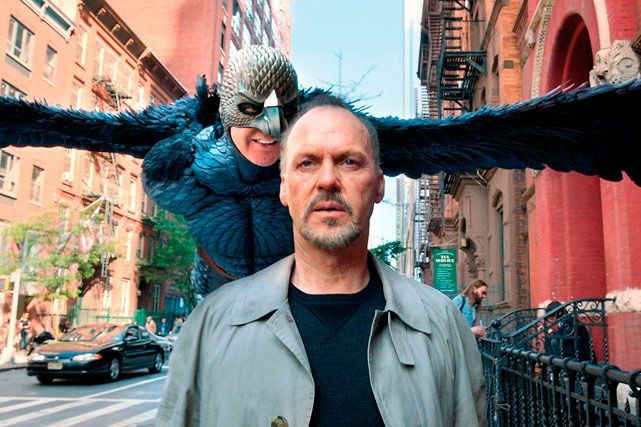
The vibrant and ample use of colors in every frame not only defines its theatrical base, but also defines Riggan Thomson’s diverse thoughts

Based in New York, the film pans around the premise of an actor Riggan Thomson, who is fairly forgotten now that his only groundbreaking work Birdman is off the floors for years. He is determined to make a comeback through theatre this time, as director-actor-writer. The film is nothing but a journey from a few days before the play premiers at Broadway, to the day it does. It seems like the entire film is shot in one take, for which cinematographer Emmanuel Lubezki won the Academy Award. This ofcourse, is among the countless nominations and accolades the film received. And justifiably so, Birdman or The Unexpected Virtue of Ignorance is nothing short of a marvel. 

Now, there isn’t ever going to be ‘enough’ words when one sets to describe Birdman’s powerful camerawork. Honestly, I was left hanging in the air with so many transitions, but I also won’t deny that a couple of them were too obvious. The film talks in ethical, artistic connotations of being an actor or anyone from the industry of performing arts. It highlights how the gray area in theatre or cinema, upon commercialization has only widened. So much so, that black and white seem made up or fictional in essence. So many media theories come to mind with portrayals of audience reception, and how even if not visible on the surface, it’s only capitalism that drives all the possible factors. 

Birdman portrays Riggan with a constant alter-ego that keeps reminding him to reach for the stars, and in a way that never ever makes him settle. This inclusion is so peculiar that by the time you reach the climax, you either will be bewildered by what you just witnessed or you wouldn’t quite understand the point of all the elements intertwined. The way Riggan gets a new face in the end, the way his heart longs to fly high (literally) and the way his initial cynicism is suddenly something heroic in the face of profit and crowd reaping out of it, speaks volumes about one very important aspect of the society and also about Inarritu’s versatility as a filmmaker. 

Riggan’s daughter Sam played by Emma Stone is showcased as living embodiment of what neglect and constant jeopardizing of self-respect can do to a person. She slams her father for still living in the body and soul of a fictional character that was “an entertainment for white people”. And not long after this, there’s a sequence where a black man shouts at Riggan saying, “You suck!”. What could be a better representation of a narrative visibly offensive to a group, while the privileged ones hail for it! 

Many such hidden and visible portrayals make up for Birdman (or An Unexpected Virtue of Ignorance).  

Escape from Alcatraz; a tightly wound plot that won’t divert your attention for a minute

Whenever I sit to watch a film from the 70s or early 80s, there’s always a preconceived notion that I’ll have to work harder at giving attention to it, but Escape from Alcatraz is a beautiful reminder that not every seriously written old film demands that from you. 

Life in jail, and the constant will to break out of a system that pledges to entrap you forever, is what Escape from Alcatraz pans around.

The film set in 1960 America, shows the Alcatraz island jail, San Francisco which brags proudly that no prisoner has ever managed to escape. It’s based on a true story where three prisoners manage to escape the premises under the supervision of one of them, Frank Morris. 

Now, there are no specific mentions of why all the prisoners in question wound up in jail, something that further keeps the narration to as much is required and clearly represents Director Don Siegel’s vision of how tightly he wanted the story to go forward. 

The premise tells the viewers what is going to happen, so what is really left here is making the process seem extremely interesting and thankfully, the film succeeds in doing so. 

Whenever one thinks of films based on escape from jail, Shawshank Redemption pops up as it rightfully should, but giving this one a try is even more important considering it came out 16 years before, and is based on a true story.

Mind you, there’s absolutely no comparison here, just a strong recommendation of a good film. 

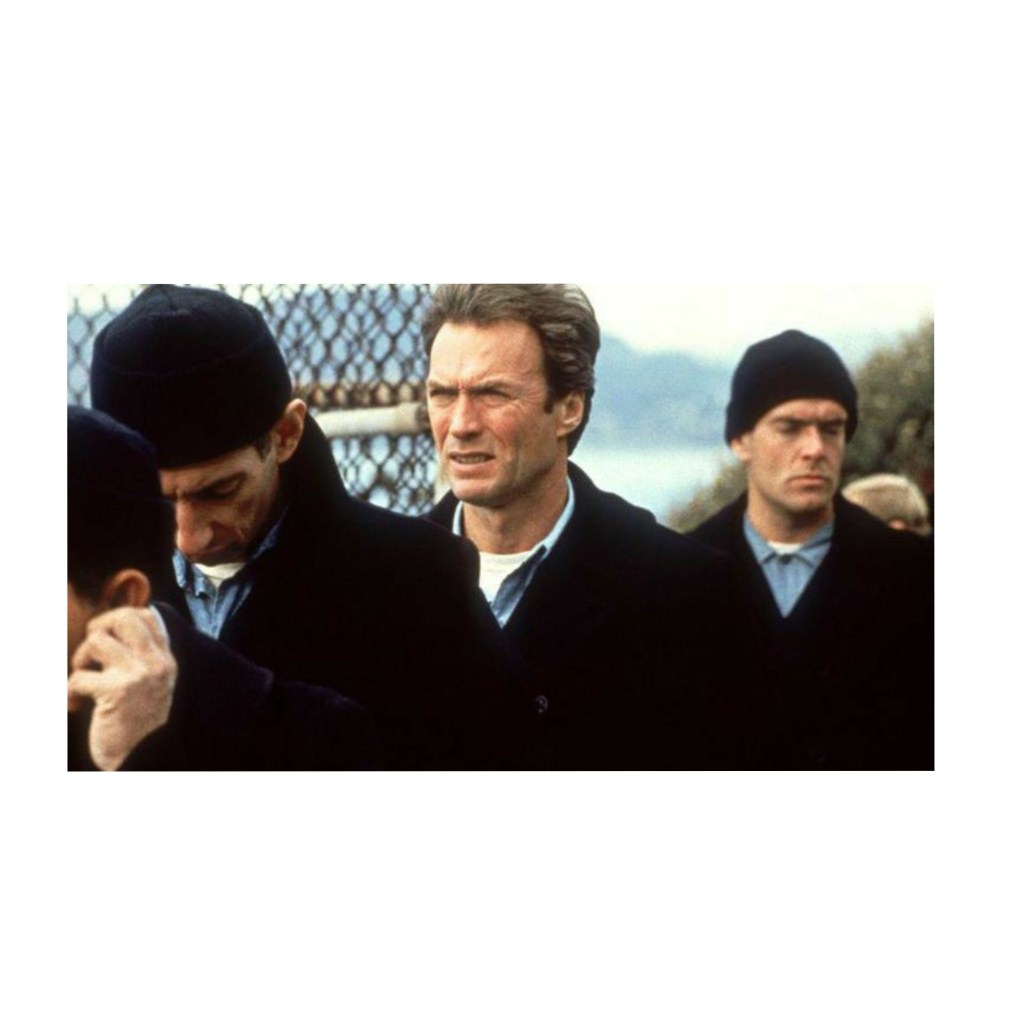
Interestingly, Clint Eastwood plays Frank Morris in this film, who presently is far more popular as director than as an actor. But seeing him act in this one along with the ensemble is exhilarating. 

Along with showcasing the escape plan, the film also provides an insight into life in prison. Although it isn’t as deep, but that is also not the point here.

Now all in all, one look at the film will definitely draw out a good story and direction but from an aesthetic or cinematic point of view, there’s not much in store here.

Give it a watch if you’ve been longing a good, fast paced, intelligently written film.

Enola Holmes; Harry Bradbeer’s meticulous yet forgetful world carried on by Millie Bobby Brown’s blaze

To put it simply, Enola Holmes is or at least could’ve been an awesome directorial with a little more emphasis on the screenplay. However much of brilliance Millie Bobby Brown maybe, there’s only so much she can do to take the film forward. Not discarding the basic narrative that highlights patriarchy in late 1800s, political reforms of England and a little mysterious quest Enola is on, that intertwines all the subplots. The intention sure should be lauded but sometimes, when you attract the viewer on the pretense of a mystery, but lay far more importance on the deciding factors and less on how the mystery unfolds, the message doesn’t deliver.

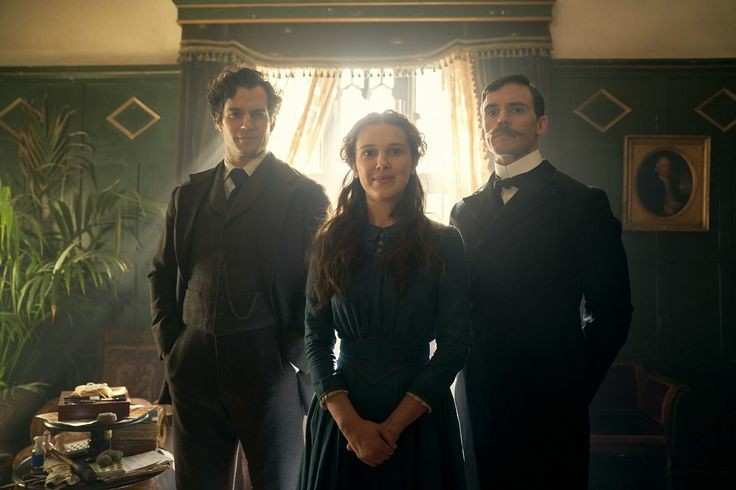
To perform next to Henry Cavill and Sam Claflin and outshine the presence of both is quite commendable

Enola Holmes is the story of Sherlock (Henry Cavill) and Mycroft’s (Sam Claflin) little sister who is as witty and sharp as his eldest brother, but seldom finds a way to make it big in the same world as his. Her gender, the time she grew up in, political situation such that is still far away from women’s voting rights, there is little to no scope of her being taken seriously with mystic endeavors. Set in 1884 England, the film pans out around Enola’s missing mother (Helena Carter), who made her who she is today, but also considers privacy the greatest virtue of all. The latter makes her quest difficult and hence comes forward, a chest of hidden clues only Enola could decipher. These pave way for the find, but it is not long before you yourself realize that the mother voluntarily has laid down baits for her daughter. While Bobby Brown leaves no stone unturned in doing justice to her character, what intrinsically seems too much is the deciphering sequences. As a viewer, one wishes to make sense of something and delve into it as the story proceeds. But the numerous codes that in no way link to one another but magically make sense to Enola every step of the way, don’t seem as marvelous as intended. 

If you’ve seen the trailer of the film, you must expect fast-paced events because they’re in abundance and set a good pitch for what to expect. The feminist narrative is as prevalent in the film as in the trailer. Mycroft Holmes and his unwillingness to let go of his toxic masculinity even when his mother goes missing, points to the lasting inhibitions patriarchy comes with. Elements like a lady’s corset and demeanor or the mere definition of being a woman seeming very close to being a slave is meticulously hinted at. For instance, the woman who tutors Enola into behaving like a lady says “These clothes will free you and make you fit in” as she talks about hip enhancers and waist tightening corsets. This serves as a subtle explanation on why women themselves never question their oppression or at least see it as one. 

The film digresses from its initial pitch quite frequently and unapologetically. It fails to hold you in due to the lack of newness and unpredictability. With so many political undertones, it feels like you need to be thorough of facts before you indulge into fiction. Henry Cavil as Sherlock was supposed to be underplayed because this is not about him. It is not his story. But he comes across as too timid, partly because of poor writing and partly because we have had the likes of Benedict Cumberbatch and Robert Downey Jr play the role which has set the bar way too high. 

What stands out though, are the camera movements. Inarguably, all the chase and fighting sequences are top-notch and probably the highlight. Whenever Enola is in the frame, the camera doesn’t place itself at a distance, but rather tries to catch a glimpse of her mind through several close-ups. This fuels up every time she looks into the camera and talks to us. Evidently, Enola Holmes isn’t worth the hype yet a valuable addition to Sherlock’s world. 

Profoundly feminist and how! Dolly, Kitty aur woh Chamakte Sitare, a brilliant commentary on invisible sexism

It’s absolutely liberating in itself to see powerful female characters written and come to life. And what adds to this beauty are women directors penning down these roles and becoming sole in-charge of their representation. With an opulence of social subjects in films, but scarcity of the right people taking charge, Dolly Kitty aur woh Chamakte Sitare comes to the rescue. 

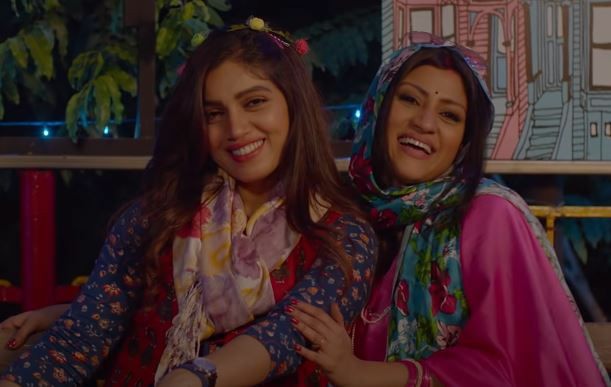
Kaajal Kumari and Dolly Yadav supporting each other through the ever flowing stream of casual sexism

Set in Greater Noida, this film is the story of two cousins Dolly Yadav and Kajal Kumari who have starkly different lifestyles if looked at from afar, but share the same agony that womanhood often presents us all with. Dolly is a married woman whose sex life with her husband has been overtly inactive and a word like ‘thandi’ is used to denote her by him. What amuses as well as bewilders me is the ease with which she has accepted this label and how that speaks volumes about systemic oppression that makes us perceive sexism as normalcy. On the other hand, Kajal hails from Bihar and is new to the city in search of work. She works at a ‘call center’ where she’s required to please men to climax and other pleasures over the phone. Again, the representation deserves all the accolades because there isn’t any excuse to her profession except that it’s her choice. Both these women have peculiar, extremely subjective lives but women all around can relate to their unspoken ordeals. This is where Alankrita Srivastava wins. 

As opposed to the picture painted by the trailer, the film isn’t just about sex and pleasure. In fact, it isn’t about it at all. Through Dolly and Kitty’s lives the screenplay highlights women’s need for companionship and acceptance. It explains why women shouldn’t be put through humiliation just for some ‘life lessons’, or as a package deal that comes with being female. There is no glorification of adultery in my opinion. Instead, it highlights how differently it costs men and women.

There’s no doubt that the ensemble carries a big weight here. Konkona Sen Sharma is inarguably a blessing to the Indian Film Industry and when it comes to acting and portrayals, I don’t think there’s anything she can’t do. Bhumi Pednekar does justice to her role and I can only imagine her wonder at being cast alongside Sen Sharma. Both of them play women who dream, of a better life. And seeing women support each other against patriarchy is what the world needs today, more than ever. Amol Parashar was probably the most maturely written character. As Osman Ansari, he is soft, poignant and kind. But he doesn’t lead. He doesn’t come to ‘rescue’ Dolly. He only stands there to hear her out. 

There also are many other narratives the film tries to put in, like homophobia, anti-women politics, the taboo around public display of affection etc. But the only drawback here is that all of these get cluttered in the end, with some unnecessary shootings in the end for example, that don’t add to the existing plot. 

Nightcrawler: A cynical, psychological and weirdly therapeutic ode to the human dark side

In the opening sequence of Nighcrawler, there stands a fine looking Jake Gyllenhaal followed by his attack on a policeman. This intertwined irony of the premise sets stage for what we’re about to witness: society’s definition of normal and driven and how that turns into weirdly cynical and problematic. 

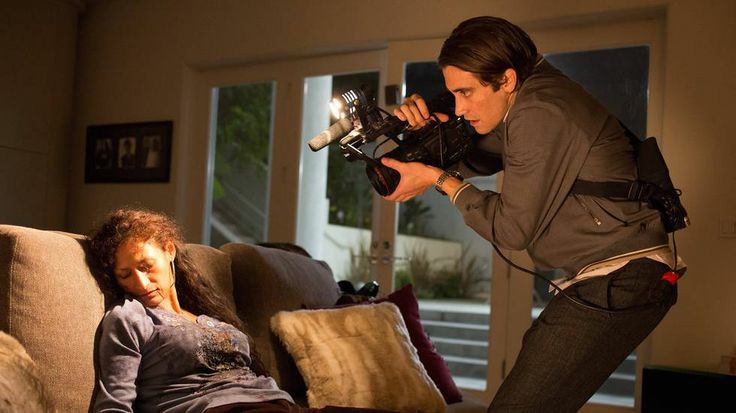
The frame most effectively captures cynicism at all times.

Nightcrawler is the story of Lou Bloom, a young man who has recently developed feelings for the profession of a stringer. In his job, he is required to work for himself fetching crime stories via footages and selling it to KWLA News. This rather harmless looking and even noble looking job, is layered with such deeply horrifying gratifications, that your eyes won’t believe. Or would they? This cynicism is represented via Lou, whose personality is knit up with all combined dark temptations the human mind wishes to pursue. His character feels like a warning sign that shouts “Beware of this side of yours!”.

Of late, Jake Gyllenhaal has been present wherever I see. Since the past 4-5 years his prominence is cinema can be unanimously felt. But to my dismay, the last film of his I watched was Spiderman: Homecoming. And hence, Nightcrawler came like a breath of fresh air, to put it subtly. In actuality though, it blew me over with wonder, surprise and admiration for his work. I can’t even imagine how he brought Lou to life. His cynicism today is better understood, all thanks to Jake’s portrayal and director Dan Gilroy’s constant efforts at keeping the ensemble in sync with Lou’s actions. 

As you approach the end, you can slowly observe how so many others played a part and fuelled Lou’s obsession for their own good. This shows that everyone is as bad and selfish as Lou but no one wants to sit in the driver’s seat. 

More than what you do, it is important to know why you want to do it

Lou Bloom, Nighcrawler

The above stated line, is something one would dream of saying and truly believing it as they do. But look at who spoke it in the film. What a dark attempt at hinting that we have all capabilities of becoming him some day, and how we actually are him but just better at hiding it. 

However much I keep highlighting Nightcrawler’s dark undertones, it also is a very therapeutic film. This is because it validates our recklessness by saying that we’re neither alone nor the worst case. With it, it also validates our unwillingness to get out of bed one morning and shows us how that is better that becoming Lou Bloom. It is all of that, yet a constant high-pitched hum in our ears that makes us hate ourselves. The flipside is too fictional to be applied to general behavior but as a viewer when one gratifies their needs through Lou, they come to know how very thin the line is that they’re standing on. 

For a noir film, it is far more engaging than others as well as serves its purpose of hitting you in the gut. In this character-driven film, it is lovely and admirable when a film’s screenplay subtly touches upon many prevalent issues yet doesn’t digress from what it bases itself on. 

Zero Dark Thirty; an unnecessary political angle beamed into an otherwise brilliant film

For those who live by the Academy Award winners list for their film recommendations, must be quite aware of Zero Dark Thirty, a film about how the CIA managed to encounter America’s greatest evil, Osama Bin Laden. Just a mention of the issue the film bases itself on, is enough to be prepared for a detailed tale of how this encounter came into being spanning across the timeline of the World Trade Centre incident in 2011 to the time Laden was finally killed.

Unapologetically islamophobic and visibly tries to save the repute of America

But what seems rather unexpected and yet is not, is the over political narrative the film hoards. 

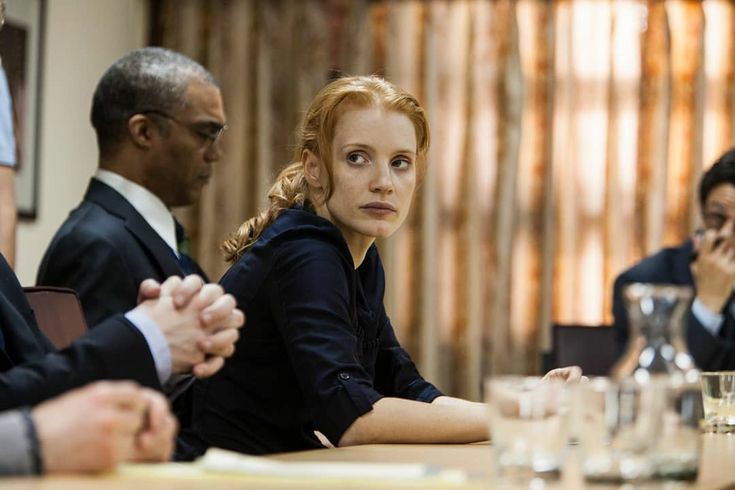
The film mostly goes back and forth between Pakistan and Afghanistan where the CIA had set up operations to further their investigation into finding Bin Laden and prevent further bombings and terror attacks elsewhere. The film’s star character is Maya, CIA’s Intelligence Analyst who gives her all to find messenger Abu Ahmed who she believes will lead her to Laden. Played by Jessica Chaistain, Maya’s character was by far one of the most layered characters I’ve come across in a long time. 

Despite many accusations of an unnecessary feminist agenda, Maya’s character didn’t seem overdone to me at all, and deservingly so, Jessica Chaistan won the Academy Award for Best Actress for this role. 

Not to forget, the film does have minor stereotypes against muslims in the film. To be honest, the stereotypes aren’t really that pretty but given the narrative of a country fighting a terrorist who is eventually found in an Islamic country, it was quite expected from an American production.

There’s an existing theory that says the film’s release was purposely slated prior to the Presidential Elections, in order to ensure Obama’s reelection. Even if one doesn’t abide by it, the constant political conjectures throughout the film referring to “the president” time and again, does give an upper hand the democratic party.

Overall, it is quite interesting to even ponder over Osama’s killing and to be presented visually, is a treat to the eyes.