
It doesn’t quite happen these days that I stumble upon astounding films like Portrait of a Lady on Fire that make a beautiful example of themselves, and whether you want to or not, leave behind a permanent mark on a mind that thinks and breathes cinema. To be honest, I don’t even consider myself a person worthy enough to give a review of sorts to this unspeakably poetic film, that not only signifies art but also fits it into the window of an informed storytelling narrative that for one, isn’t likely to be the optimal choice for viewers who seek pace, but also manages to keep them grabbed because it justifies the time it takes to build characters, and all the elements it constitutes of in the process.
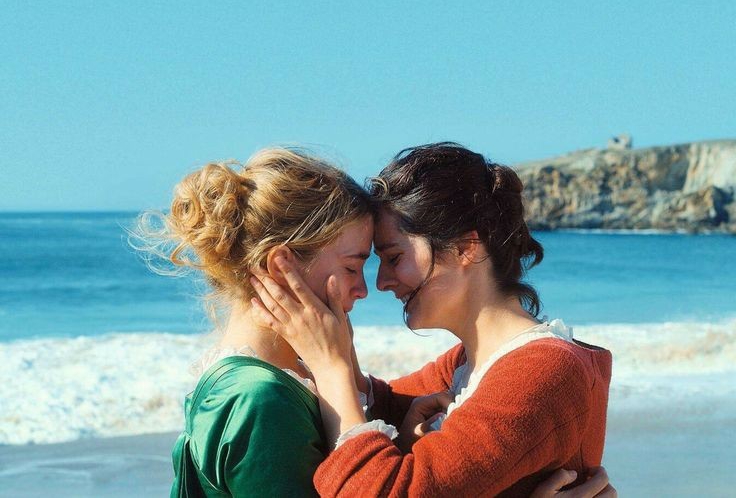
Directed by French screenwriter Celine Sciamma, Portrait of a Lady on Fire, as the title suggests is the story of what led Marianne, a young painter to paint this portrait of an aristocrat Heloise, which unlike others, shows Heloise facing the high tides under moonlight with her gown on fire. Although the film is established around this plot, what unfolds is even deeper and more meaningful than what appears on surface.
What caught my eye among so many elements was a regular focus on painting as an art form, so much so that important dialogues and breakthroughs in the film take place in the background as Marianne paints the portrait. The subtlety with which the relationship between Marianne and Heloise is romanticized, is neither preachy nor is intended to enlighten but still leaves me teary eyed. All jam packed in an overwhelming framework of the 18th century France, the film to its core is rather driven by human emotions, love and passion.
In a sequence from the film, we see silhouettes of Marianne, Heloise and her maid Sophie walking at dawn to a camp fire, that was indicative of such liberty, independence and warmth women can feel around each other if they decide to lift each other up just by being present.
Not to mention, Sciamma’s cinema has always been constituted of feminist undertones and celebrates female sexuality, and likewise Portrait of a Lady on Fire is also full of this energy.
To conclude, it hardly feels like the film is carried forward by one character, or one plot/subplot or one element. Instead, it is driven by conversations, art and the social dilemma and the inner joy of falling in love with the same sex and being a woman.

 The F Word