
Beautiful french streets, a bunch of soldiers and one of them picking up a long pipe in order to take out one drop of water out of it; the opening scene of Dunkirk is of the best impressions of signifying wrath in the face of beauty.
As I delve deeper and deeper into Christopher Nolan’s Dunkirk, I interface with new avenues of brilliance. It’s isn’t like I didn’t expect marvel just at the mention of Nolan being director or the exuberant cast of the film, but there’s only so much you can expect in prior, rest is all served up eventually as the film unfolds. Some might call the film tedious or slow or some other non-criticial form of it taking time to lay out the story, but from where I see it, I find it worth my while.
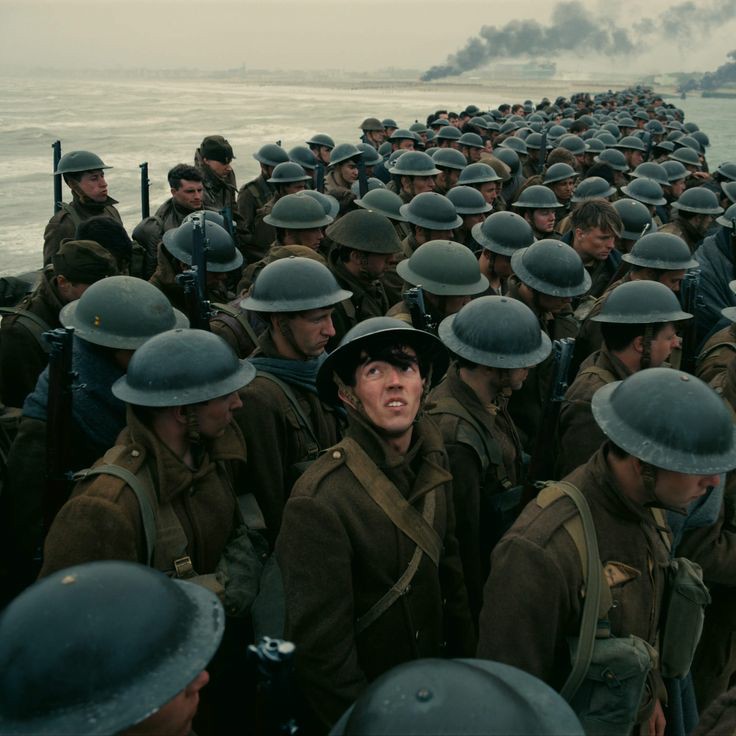
Dunkirk films out the infamous episode of the British soldiers’ evacuation as they face consequences of the war with France as part of WW2 in Dunkirk. As they direly wait for their troops to rescue them, both them and the rescue team are faced with unexpected outcomes and although this attempt is met with some success, it does leave behind immense collateral damage.
Interestingly, the filming is done through three different stand points of the air force, the military on land and the rescue ships in the sea, and hence the unexpected is performed by Nolan, through the inclusion of non-linear editing in a war movie!
As soon as I realise what is going on, I couldn’t decide what to be more shocked of; the series of events unfolded or the fact that Nolan managed to do what he is famous for, and nail the writing!
Needless to say, the cinematography is what makes Dunkirk the exceptionally phenomenal film that it is. Cinematographer Hoyet Van Hoytema, who also assisted Nolan with Interstellar does a fine job by encapsulating the emotions and fear of war, and does so mainly through long shots and tons of them. Sure, the three perspectives as mentioned require him to do so, but it never seems like compromise.
Talking about the ensemble, I did judge the casting a little bit when I spotted Harry Styles but man, did he amaze me by the end!
You can sure not miss Mark Rylance as Mr Dawson, continuing his charm and simplicity leaving me reminded of this role in the Bridge of Spies. That reminds of a rather peculiar episode between George (Barry Keoghan) and the soldier (Cillian Murphy) on board and how effectively it brings forth two quite different effects of being in war. While with the soldier, it’s fear and longing to be home, and with George, it’s the satisfaction of being part of something significant.
The only regret I have is, not being able to watch it on iMax, and the fact that my potentially pea sized brain failed to connect the dots due to the way it’s edited.
All in all, Dunkirk is a grand experience and it is important to stay focussed to be able to contain all that the film has to offer.

 The F Word