
The opening shot of the film begins with a skyline view of the city, the story resides in (probably the only time we see it in the bigger picture) and ends at dial 4 of an enormous clock tower of a train station, a kid peeping out of it.
This seemingly varied collection of shots is one take and it does two things; accounts the existence of a fantasy world capturing everything into it, and negates the possibility of anything lesser than perfection upholding the film.
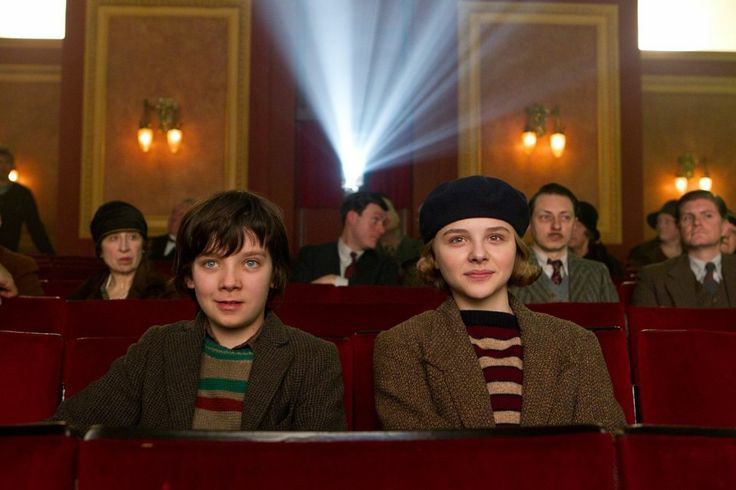
Other than that, Hugo is nothing but cinema about the inception of cinema directed by someone who is the flagbearer of good film and aesthetics: Martin Scorsese.
Now, it’s probably odd for Scorsese to direct a film meant for children but as the film unfolds I understand better why he took it up; for nothing but his love for films. As a former film appreciation student and hopefully a potential film critic, I found nothing but awe in the film surrounded with film history narrated through lenses of the present.
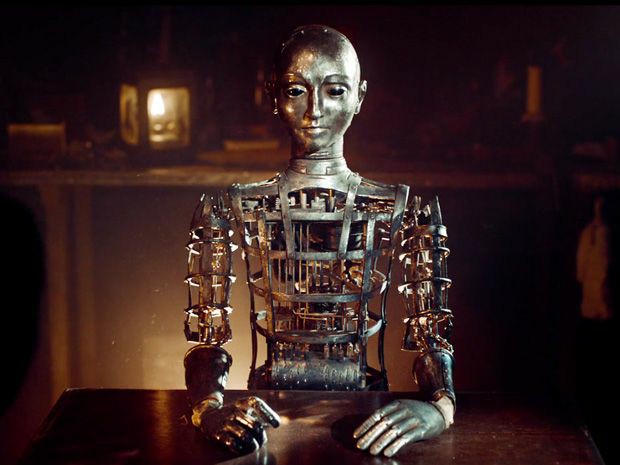
Little kid Hugo Cabret (Asa Butterfield) has just lost his father and right before he died, they collectively worked on fixing an automaton in order to find out what lies in it. In the process, he meets Isabelle (Chloë Grace Moretz) who helps him carry out his search without her godfather George Melies’s (Ben Kingsley) interference. What unravels however is how George is more connected to the automaton than Hugo imagines.
This automaton is peculiarly designed in a way that it reminds you of Fritz Lang’s Metropolis, another pioneer film that is still looked up to, for inspirations.
Talking about film history, Hugo touches almost every element like the involvement of the Lumiere brothers, the first motion pictures, people’s amazement as part of its reception and of course, a filmmaker’s journey from being popular, to being in debt, to letting go of his passion and being completely forgotten.
Set in the early 1900s, Hugo talks of cinema also from a bit earlier 1900s, as yesteryear’s or categorized as ‘old films’, and that says so much about the obstacles faced by films to finally be recognized as art.
Isabelle, Hugo and the friendship shared between them is particularly unique because Isabelle is a book lover and Hugo is a film fanatic, and just after they’re shown exchanging their interests, they walk hand in hand, and I don’t believe there’s anything more beautiful than this merger of ideas.
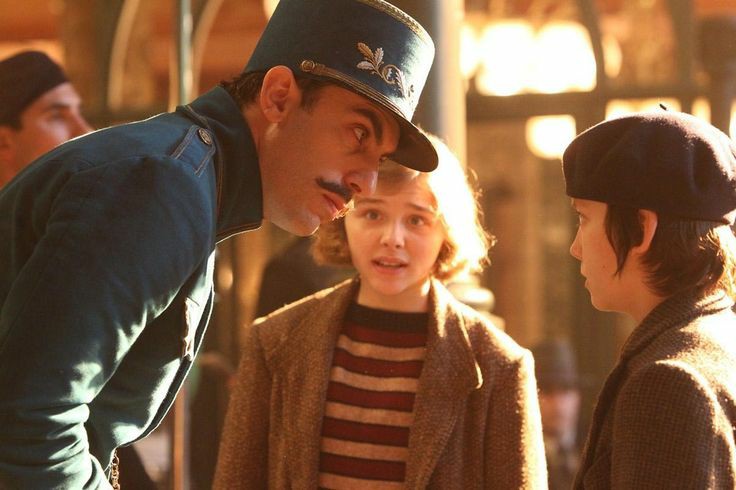
There’s also the very talented, Sacha Baron Cohen, as the station inspector who likes to moral police children into orphanages, whose character isn’t seemingly pivotal to the story but nevertheless, his screen presence is.
Be warned, there is use of many techniques here and hence unlike what you assume, this film isn’t exactly entertaining as it is important.

 The F Word