
If you had a tedious time sitting through Roma, but want to experience the brilliance that is Alfonso Cuaron, Children of Men is the film for you. Don’t get me wrong here. Roma was correctly paced and made suiting to what was needed there and so is this film, it’s just that Children of Men wreaks havoc in its element and nothing can be slow about it. From the beginning to the end, this film is a commentary on so many social evils, not just the ones acknowledged but even the ones that are celebrated in disguise.
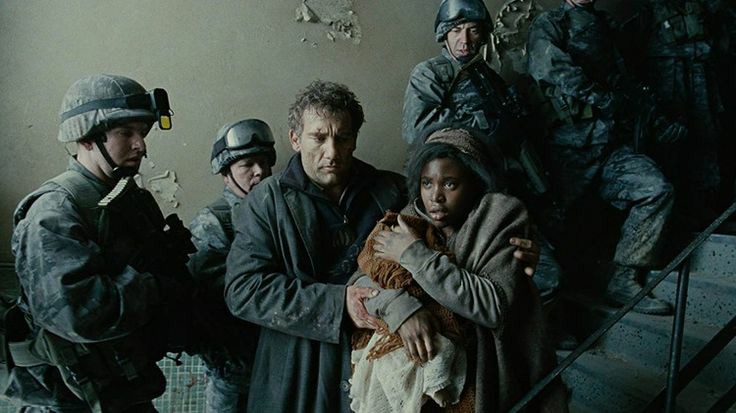
Based in 2027 London, Children of Men is the story of a post apocalyptic world (of sorts) denied fertility and new life since 18 years. A seemingly personal loss, this in fact leaves imprints of devastation on the entire city and the world with outrage from all sides and communities seeking human rights like never before, and a certain clan wanting to turn this too into a capitalist agenda.
Among all this chaos, is Theo Faron, who couldn’t care less about the situation as he believes it’s too late for senses to kick in the minds of people. But his obliviated mind is made to care as he comes across Kiki, who is pregnant ready to give the world a new hope, or maybe just wanting to stay happy with her child.
To her dismay, there are many hungry elements waiting to reap advantages of her situation, or as led by 18 years of dismantled society and injustices prevailing much before that, have become opportunistic of everything human.
Certain institutions the film comments on are capitalism and bureaucracy and subtly hints at how preachers of these institutions cry for help and play victims of a problem created by them systemically overtime. But obviously, there’s mention of religious groups and their uprising, mainly Islam, with slogans like “Allah hu Akbar” chanted in the background when bad guys chase the good ones. This might seem problematic and probably is too, but the focus here is to address problems as well as catalysts to it.
There’s fairly enough mention of the refugee crisis and illegal immigration persisting in this world which makes it seem like people in power only want to target certain groups no matter what the situation and when these groups protest, they’re called terrorists or breakers of peace.
Clare Hope-Ashitay as Kee is heartwarming and her portrayal is both of an innocent little girl and seems mature. She likes to use words in the simple past like “wicked” or “annoyed” as reactions to all this materialistic wants to do to her, but is so tough when she needs to be. In a scene from the climax, with buildings breaking down, bombings everywhere, people going crazy, Theo trails the cooing of Kee’s baby and that is the most beautiful thing I’ve come across in a long while. It symbolizes what people are forgetting whilst fighting for ‘peace’.
Cuaron, alongwith Timothy J Sexton has essentially brought forth a saga that portrays what terrorism or the idea of it stems/would stem from and it is highlighted using the premise of a post apocalyptic world suffering the wrath of infertility for 18 years.
His direction could only be properly justified with the brilliant camerawork by cinematographer Emmanuel Lubezki who has made sure to cinematically as well as realistically make sure that the audience connects well to what the frame encaptures.
The film may not be the regular thriller or fictional creative space you seek. It is much more than that.

 The F Word