
When one sits down to watch City of God, it’s best to do it without any prior inhibitions. When assumptions are left behind, that’s when the experience becomes real. Directors Fernando Meirelles and Kátia Lund aim to put across the most real depiction possible and they don’t waste time in making that clear. Since the first minute, City of God breathes of realism and sets stage for an immersive, nerve-wrecking experience.
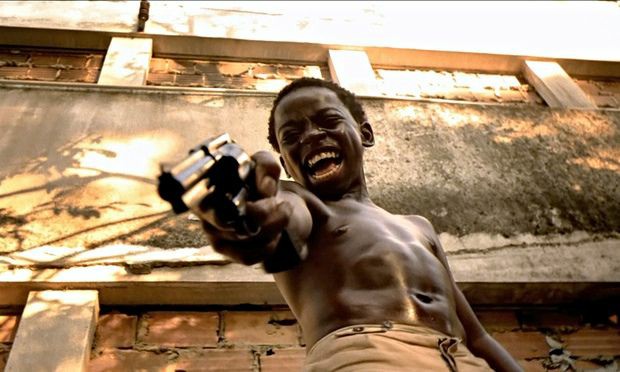
Set in an actual favela, the film pans around the lives of Rocket, Li’l Dice, Benny and Knockout Ned among others. The film depicts the timeline of 60s and 70s. How a black-hispanic community neglected by authorities and police protection, apart from basic life amenities falls prey to coke smuggling, mass shootings and hands completely drenched in various crimes, is what the film portrays. In the entire ruckus, the only person who remains untouched is Rocket, a budding photographer who pounces on the opportunity to use his skill in favor of his village.
So many reflections come to mind with each shot and frame of this film. It is a commentary on the system that fails people and later holds them accountable for their state. It also talks about the role of media in drawing attention to important issues; issues that lack self-interest for the system, a humanitarian crisis ignored most conveniently. In a sequence from the 60s, Rocket talks to his friend by the lake when he is asked what he desires to become. He says, “Not a hood or a policeman coz I’m afraid of getting shot”. This simple instance where he equates an illegal and a legal work, is when the audience first comes to terms with the fear of death.
Knockout Ned is an interesting character in the film who gains prominence in the narrative towards the late half of the film. Like most hoods in this part of Brazil, he also gets his hands drenched on the premise of revenge that Rocket later quotes as “Swift revenge became an all out war”. From random shootouts to unexpectedly inhumane sequences, every inch of the film is aimed at making us think long and hard.
This can also remind one of the US prison boom that is mass constituted of black people. The country here is Brazil but the negligence of marginalized poverty stricken places is quite in sync with the US. This could also symbolically represent how the 70s might have been the base ground for the immigration crisis and prison boom in developed countries.
To many, the film might look superficial and ‘exaggerated for cinema’, but in actuality it is a book adaptation taken up by screenwriter Bráulio Mantovani. The book is written by Paul Lins and is a semi-autobiographical novel that was hailed for its writing and vividness.

 The F Word