Memories of Murder: Bong Joon Ho’s second directorial and a peek into his following marvels

Let me first come out clean. Open ended mystery films really put me off, because it essentially leaves the main trail hanging. BUT Memories of Murder here didn’t do so, one because it is based on a real crime case from Hwaseong, South Korea and narrates the tale of the first ever serial killing and assault case in the country. Don’t look up the story. It might ruin the fun.
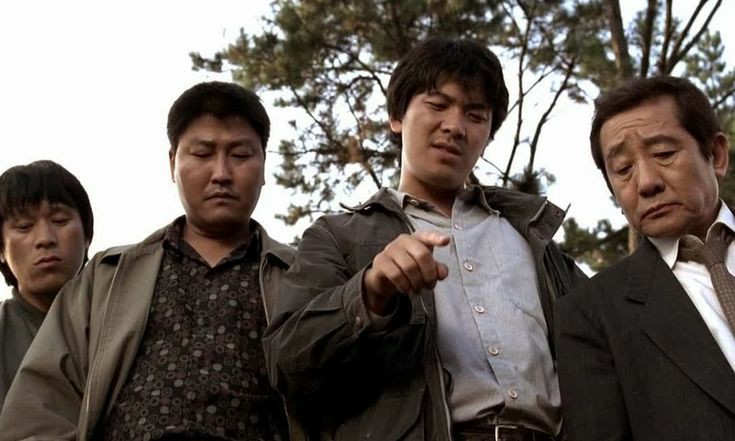
Memories of murder does take a more philosophical turn as it proceeds.

To put it simply, this a crime thriller backed with certain typical representations of the suspects, the ongoing investigation, evidences found on the way etc, but there still is something that sets it apart from so many other films of this widely used or exploited genre. This difference is named Bong Joon Ho. A rather young filmmaker at the time whose devotion for direction and filmmaking is what Memories of Murder signifies. Today, we all know him better because Parasite won an Oscar, but his films are indeed a blessing to us, rather than this award a blessing to him. Even though these elements can seem typical, the screenplay is written such that they don’t seem knit together so typically. 

The film is set in 1986 and takes us through to 2003, via the quest for the killer. If at all one is bewildered by the Zodiac killer, Memories of Murder will set a new par for them. The essence doesn’t lie in the investigation, but in the characters of the film and how their life goes about in this small town freshly alerted by the presence of a serial killer and rapist. Kang Ho-Song, inarguably Joon Ho’s favorite choice in casting, plays Detective Park Doo- Man whose ways around any investigation are keenly focused on getting over with, rather than finding the actual killer. This description might seem too wicked but his character is more loosely-wound or too engrossed in the marvels of his own intelligence, to put it better. For the first half of the film, the investigation is shown to be somehow carried out which also hints at age old ways of government work that help out criminals to roam free, if at all corruption is missing. 

If you look closely, the film isn’t open-ended at all. When you’re done watching the climax you will realize that the film’s quest wasn’t to present us with a name or a face. Instead, it was to lead us to ponder how easy such crimes are, and how overlooked its solution is. 

The gruesomeness of rape and murder isn’t something one is alien to, when it comes to crime thrillers. But it is advisable to maintain viewer’s discretion because it might get too graphic. 

Certain sequences from the film are particularly engaging, or more engaging than others. Even through the numerous times these detectives catch the wrong person, there isn’t just failure shown, but through the wrong suspects too, another perspective of the society is put forth. When you watch the film you’ll know what this means. But obviously, the film highlights the technological and medical lack of advancements in the country at the time, that more than once, put the investigation on a halt. 

Lastly, it was weird witnessing the obvious absence of class divide as a narrative in a Bong Joon Ho film. Nevertheless, he did highlight many aspects of us as a society, and held us rather accountable for not looking out for a crime unless it’s one of our own in distress. 

I’m thinking of ending things, and other dark concepts Charlie Kaufman puts in perspective

The film opens with the protagonist talking about her feelings and how she makes sense of all that occurs around her. She begins with the title, “I’m thinking of ending things..”

With little to no clue of what she means when she says ‘things’, this film for the first time hints at the infinite possibilities it is going to make you think of. And just as promised, this book adaptation bodes you in for an excruciatingly dark and terrifying ride. A ride that gets creepier because it feels relatable. 

An ode to womanhood and how they end becoming a matter of pride/shame for their partner or family and nothing more

I’m thinking of ending things is the story of Lucy/Lucia/Louise/Amy, basically a woman struggling for an identity and a name assigned to all that she feels and breathes of. Through the perspective of a car ride she takes with her boyfriend Jake, the film literally takes us and puts us in the ‘subconscious’ we casually keep addressing and shows us how cluttered and beyond repair it is or is getting with time. After an uncomfortable car ride to the farmhouse, we’re introduced to Jake’s parents, whose presence feels like a visual representation of all the disgust that married couples keep inside their heads. The film can get too confrontational for some. 

Halfway into the film, a loop begins when Lucy is shown coming down from the same steps time and again. Wonder what that is? It’s the cycle we create for ourselves when we stay ignorant for too long, when we believe that the present time is not ideal to act on our feelings. We normalize pain and suffering (both inflicted on us and by us). 

Sexism, Feminism, Homophobia, Ageism, Narcissism, Paranoia, Suicidal tendencies, Victimization, need for Validation, Equality. This is a list of concepts the film covers, when looked from a distance. It’s all in the premise. When you look closely, it could go on and on (another loop that keeps reconnecting to some other institution of our being). 

Throughout the film, there is a change in the protagonist’s name, profession, interests and they eerily represent or come from what her partner wants her to be at that exact moment. There is a sequence where her paintings are signed ‘Jake’ and she is little to no reaction to it. These are subtle representations of the extent to which she has given herself over.  

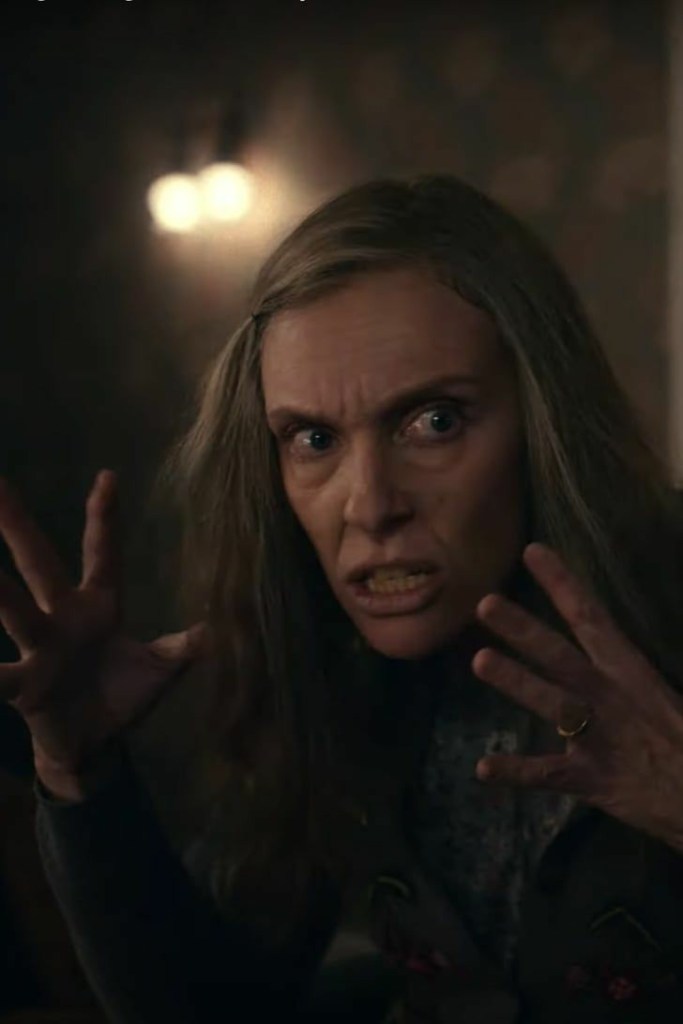
The acting performances are all top-notch but Toni Collette deserves a special mention for her portrayal of Jake’s mother, a victim of patriarchy who furthers it unknowingly. 

Toni Colette as Jake’s mother.

What’s interesting here is that throughout the film, all the concepts stated above are represented through this woman, whether they victimize her at one point or call her out for her condition the next time. Kaufmann has tried to be as human as possible with his direction. Talking about the cinematography, there is a Stanley Kubrick like eeriness to its demeanor. There are glimpses of The Shining or Eyes Wide Shut, with how the characters are treated and how there is no limit to their cynicism. The way it’s written might remind you of Eternal Sunshine of the Spotless Mind, and don’t be shocked when it does since it was Kaufmann who wrote the screenplay for both. His unwavering spirit to capture and present reality is applauding, but especially this film invites many many interpretations. So don’t be quick to decode meaning because it doesn’t have just one. Sleep on it, and you will know what you gathered.

All in all, you could categorize it into a ‘soul searching experience’ but surely one that doesn’t come with good news. And as Lucy says, “Wow is an all-purpose exclamation”, this film is a ride that will make you gasp the same word for different purposes. 

This weekend, delve into this South Korean flick for an awesome time

This one is a special review mainly because I didn’t expect to be so bewildered by an action, with amped up music and great actors because it all seemed like a classic recipe for a commercial extravaganza. Nevertheless, I think I watched it because Prime categorized into ‘World Cinema’. 

With stories that set their premise around revenge, there’s thrill, sure but hardly hope for any new twist or suspense, let alone plot twists because it essentially asks the audience to stay hooked just because there’s some action promised. BUT The Witch: Part 1. The Subversion kept on presenting me with new and better twists none of which seemed unnecessary and it almost felt like it challenged me into believing that I absolutely cannot foresee what lies the next moment. All this, with tones of genuinely unique actions sequences and impressive camerawork! 

Kim Da-Mi in a still from the film.

It’s quite safe to say that my weekend began on an amazing note. The film helms the story of Ja-Yoon, a genetically mutated human being who managed to escape the institution that tried to kill her, at the age of 8 and found solace in the arms of a childless couple. The only problem is she doesn’t remember anything that happened to her and her genetically engineered brain can’t go on for long. 30 minutes into the film, she takes part in a singing reality show and almost like a South Korean drama, meets a handsome boy on the train. I almost gave up that instant unable to believe how can all these undertones possibly fit in this story, let alone justify it. But it was a good decision to keep going because the film doesn’t keep lose ends at bay. It all made sense in the climax and how!

A visible and cinematic treat to the eyes was Choi Woo-Shik as the American English speaking witch. You might remember him from Parasite or Train to Busan. His versatility has no bounds and this film is proof. Unlike what I initially inferred there aren’t any unnecessary romantic or sexual tensions in the frame and even in the most commercially viable settings, like that of the outsides of the reality show shooting studio, cinematographer Kim Young Ho speaks of his love for the camera and greets us with amazing one-take and dolly shots. 

The only problem I had the film was its villain Dr. Baek (Jo Min Soo) and her poor choice of casting. Her character is the most poorly written and her portrayal makes it even worse because someone who anchored the pilot scene in the film, is shown in tatters by the end (performance wise) .

The film is obviously not complete because it’s just one part, so I won’t regret not understanding the very end. You can watch this film over the weekend for a good time and to be blown over quite a lot. 

The Terminal: Not Spielberg’s best work but Tom Hanks comes to the rescue

If you’re looking for a tear jerker this weekend, The Terminal could be an optimal pick. It does cater to the masses and not just a select few, but at the same time has important  connotations to it, which will give you a sense of political relevance too. 

Steven Spielberg is an ace filmmaker and director known for films like Catch Me if You Can and Schindler’s List, and even for this one right here. But in this case, there’s not as much cinematic excellence but a very simple and human story, that is glorified due to undertones of crisis some ethnicities face in the US.

The Terminal is the story of Victor Navorski, a Bulgarian resident on this very visit to the United States. He is held at the New York airport terminal because while he was in the air his home country declared a military coup which essentially means his citizenship is now of a country that is not recognized in the world map. This leaves him stranded on the airport.

This seemingly political story is unfolded rather humanly. Spielberg aims to capture hearts here, and not make any political statements. Although, the latter also keeps happening if you look closely. Through the X number of days Victor stays at the airport, he discovers means to earn some cents, meet a flight attendant and fall in love, learn English by reading books in both Bulgarian and English, and manages all this with the help of people from different races and ethnicities but white.

Why is it important here?

Because Spielberg wants to throw light on the subconscious threat minorities experience from white people. This sure isn’t generalization. This is an anecdote and a rather simple one at that, in the face of so many real lives affected by political situations in their countries and casual racism that tends to push them off the edge. 

I’ve been waiting my whole life. I just don’t know what the hell for

– Victor Navorski, The Terminal

You will find some familiar faces like Diego Luna (Narcos: Mexico), and Zoe Saldana (Guardians of the Galaxy, The Avengers). It’s always reminiscent to spot such established actors in their prime. 

The Terminal is a light hearted watch and is but obviously recommended by me. But again, if you look for cinematic excellence, like breathtaking shots, camera movements, montages, exciting twists etc, when you look at Steven Spielberg’s name, you can be rather disappointed.

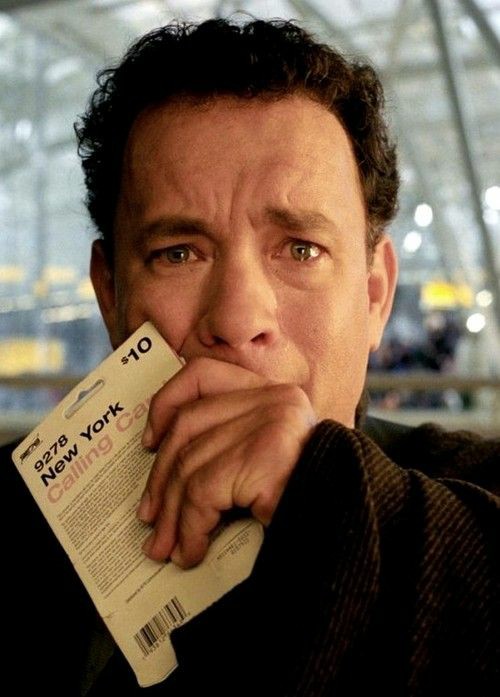
Finally coming to the obvious and adorable high point of this film, Tom Hanks.

He is officially one of the most suited actors to be taking up roles that demand explosion of emotions, expressing your ordeals and forcing the audience to be swayed along. 

As Victor, he is charming, compassionate and true to his character. In an initial sequence from the film, as Victor first looks for a place to sleep, Frank Sinatra’s Strangers in the Night plays in the background, something so emotional and appropriate. Watching him break chairs to make a bed with this romantic classic in the background, is like poetry that points out to how romanticism sometimes misses the point.

Bold, beautiful and ugly: Black Swan is as real as it can get!

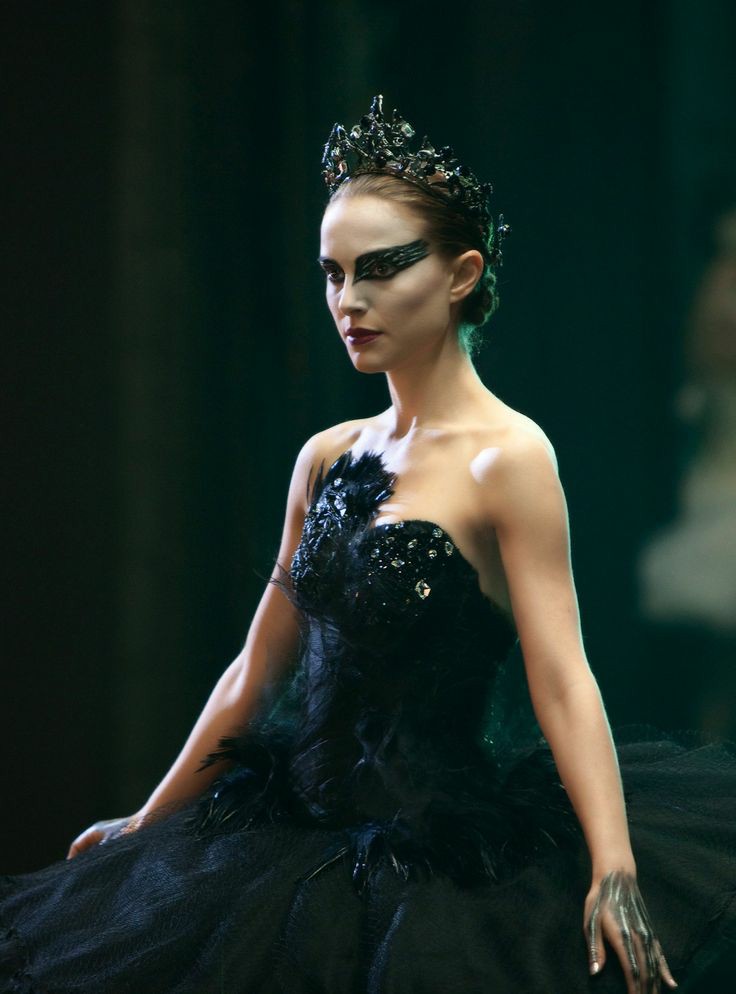
Exploring a new director is always an interesting thing to look up to. And when there’s Natalie Portman in the lead, the curiosity rises up one level. For all who admire Natalie Portman’s work this sure will be a treat to your eyes. Arguably at her career best, Portman as Nina Sayers is brilliant, poetic and makes you think. 

Black Swan is an ode and a simultaneous reminder to people to seek perfection in life to the point that it destroys them.

Black Swan is the story of ballet dancer Nina who dreams, lives and breathes to become the next lead in Swan Dance. If one reads the IMDB description of the film, the word ‘thriller’ finds a place in its genre. But don’t watch this film waiting to decipher the conspiracy of suspense behind this thrill. Look at it from a human perspective, the way any human dreams and strives to become something, the way one juggles between passion and sanity. Director Darren Aronofsky really tries to get you inside Nina’s head and literally makes you feel the juggle first hand. Cinematography plays a very important role in this film, possibly the only one so far where camera is the sole deciding factor of how the story is told. Shots are tightly placed in the frame and most of them are taken handheld. You can really see how badly the director wants you to focus on Nina that he only lets those things come in frame that Nina is concerned with and nothing more. 

Natalie is in the true sense one of the most gifted actors Hollywood has and with Black Swan in particular her brilliance is rightfully celebrated as she received the Academy Award for Best Actress in 2011. For most part of this thriller Portman hardly ever speaks but her face really speaks to the viewers. Nina in the film is expected to perform two opposite characteristics and Portman skilfully lets her do that. 

Narratives of this film have key focus inside Nina’s head and especially the last scene ending with the quote “Perfect! I felt perfection” is exactly what will relieve you from partaking in her miseries and as she finds perfection with her life, the viewers find perfection with the film. 

Class of ’83: Another refreshing offering by Netflix, slightly decriminalizing it’s recent record of problematic content

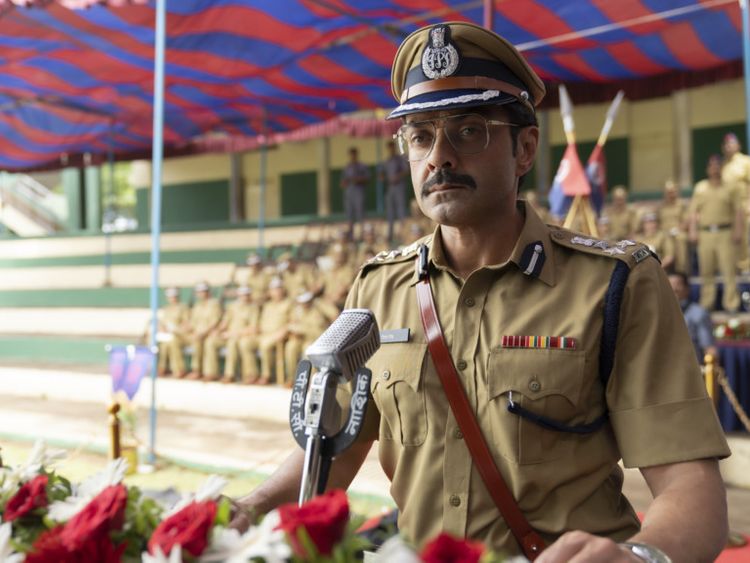
Much earlier in the film, Inspector Vijay Singh (Bobby Deol) is shown in conversation with his coworker Raghav Desai (Joy Sengupta), where he makes a remark on the state of the Indian Police System saying, “Departmental Politics aur corruption se anchuye hain abhi ye academy ke officer”. This one line is enough to give you a glance of what lies ahead; determination and will to be useful for the country, dampened with lucrative offers of corruption helmed by the bigger lot of the police force. 

Bobby Deol’s performance was surprisingly amazing and in sync with what was expected of his role

Class of ’83 is a story narrated by Aslam, a police officer in the making, who turned up to be an assassin working for the force, with four others thanks to Vijay Singh, his dean in the Class of 1983. Dean Vijay Singh wants to train these theoretically left behind cadets and make them useful in bringing down the corrupt bureaucracy. All goes well, until these five slowly start segregating with some of them falling prey to the illegal baits laid out for them. 

There’s nothing much to really analyze and take note of, in this relatively shorter 90 min film, if you glance through. But if you manage to look closely, you will see this film lacks defamation of the police force despite targeting their wrongdoings. For me, managing to do this efficiently without ignoring the circumstances that lead to officers washing their hands in bad blood, is what make Class of ’83 remarkable for me.

The film is set in Mumbai and typically, the officers here deal with bringing down terrorist Kalsekar, who doesn’t show his face before the end, but when he does it is hard to look past the simplicity and ease with which these officers bring him down, leaving me wondering if that was quite possible in the first half of the film itself. The entire show then, seems unnecessary because without any change in the initial and final details, Kalsekar is conveniently caught in the end. 

The acting performances are another thing that this film can be remembered by. Bobby Deol is surprisingly adequate in his role, and even though he might strike like an odd choice, he isn’t. 

To conclude, Class of ’83 can be a good weekend plan, if you have some time to spare and have nothing else on your mind.  

Ghost: So much more than a romantic fantasy, and not in a good way

If you have read nothing about Ghost before you decide to watch it, only owing to hearsay, the opening of the film can be very confusing to you. Not in the sense that is includes many elements, or casts a shadow on everything it initiates, but any sequence that promises of a crime thriller, hardly ever expectedly serve fantasy instead. With several problematic narratives that will remind you of many films from the 90s in terms of casual racism in terms of writing characters, Ghost still is one of the most celebrated films of all time, with nothing other than mediocrity on your side once you’re over with it (or at least this happened with me). 

Despite my apparent ‘reading in between the lines’, Ghost is not as remarkable as it is made out to be.

Ghost is the story of Sam Wheat and Molly and Jensen, a couple living in the suburbs New York, madly in love wanting to start a new life. This is when Sam in an attempt to get mugged on the street, gets killed and his ghost come to life instead, refusing the gateway to heaven. The ghost trembles at understanding how is this going to work, and this is when he finds his purpose of staying back. He realizes that Molly’s life is in danger.

The film has a good 20 min sequence of Sam meeting Oda Mae Brown, a woman who talks to the dead, or at least fools people into believing her. This black woman is shown being racist to her Puerto Rican customer, and all this is passed on as comedy. However badly Sam’s friend wrongs him, he only did it by mistake when he only wanted him to get mugged, and however the races try to help out, they’re only shown to be timid or the real takers of Sam’s life. This wouldn’t have been problematic if the representation was even. This is a classic example of filmmakers increasing racial representation but not bettering it.  

I seldom found people frowning over the obvious nature of racism or even sexism online when I looked up Ghost. But why would they? This is film still the most iconic and ‘tearjerking’ romance movie. When it comes down to this, yes Ghost has one or two beautiful segments between Molly and Sam, and some thrilling ones too as Sam’s ghost attempts to unveil his murderer’s face. If you wish to spend the weekend watching a free flowing film, Ghost should be your choice. But let political correctness and cinematic excellence take a backseat that. 

A beautiful Whoopi Goldberg is a treat to the eyes here. Although Demi Moore is technically the lead actor here, but hardly ever leaves a mark with her performance. 

Stephen King’s 1922 paves way for feminism through gruesome representations of crime

Some films seldom leave room for thought or interpretations because they have so many replacements for that. 1922 here serves creepiness and discomfort on a platter, but with an undeniable brilliance at the side.  Based on Stephen King’s novel by the same name, 1922 pans out through Wilfred James’s confession about how he killed his wife and how wrath followed him since. This 100 min long film will make you feel like you have been watching it forever, not because it’s tedious but because of the grave encounters you have viewing it that keep getting more frequent and you wish for this ill experience to end. But oddly enough, this is where the film wins. Because believe it or not, driving our senses to insanity is what Stephen King and director Zak Hilditch aim at. 

Set in a small village from America, 1922 is the story of this year panning across seasons. In a seemingly okay going household, problems arise when a wife decides to disagree with her husband and wants to sell the land and move to the city. This wife named Arnette (Molly Parker), is overjoyed when her husband Wilfred (Thomas Jane) finally gives in to her decision, but the same night he kills her with the help of their son Henry (Dylan Schmid) and throws her in their backyard. This is when misery starts following him, and the constant quest to keep his secret under drapes, steals away his life from him. 

In 1922, a man’s pride was a man’s land. And so was his son

-Wilfred James, the man who never owned any land. Just considered his father in law’s land as his own

Wilfred here, is the total embodiment of patriarchy, who despises a rich man, only because his wife never disagrees with him. The film even though holds toxic masculinity in the backdrop, never really glorifies it. Instead it puts forth the unbelievable extent to which a man can be unreasonable yet believe the exact opposite.

To signify grossness, and to deliver an unsettling experience, 1922 makes extensive use of mice. Mice eating away Arnette’s corpse and later Henry’s, and terribly horrifying Wilfred himself who is nothing but the human version of mice, who did more harm to people around him than mice could ever do. It is quite evident why it is not a favorite among the masses. The creepiness or horror can be extremely triggering but if you think you can bear with it, go ahead and watch 1922. It’s the story of a man who gets caught for murder, not by the police but by fate. 

Haider; An Ode to Kashmir and its people, two things often overlooked by every side

On 5th August 2020, among so many other ‘important’ happenings, Kashmir completed an year under the revocation of article 370, and internet ban, to state it in layman language. And to remember the sacrifices of the people there, that they make every day for the past many many years, I decided to watch Vishal Bharadwaj’s brilliant film Haider. The experience was good in cinematic terms but abysmal whenever I had to hate my privileged self from what I saw in the frame. It is only so far ignorance can take us; when a scenic place like Kashmir is represented with undertones of devastation caused by daily violence (physical and bureaucratic), it hits like a hard realization that the place can no more inspire one with beauty, but only make us feel shameful. Some of the reviews I write turn a bit political, which I never want my writing here to be defined as. But nevertheless, some things are too important for my privileged soul to consider unnecessary for my blog. Hence, I state that some parts about it might comment on abuse of power. 

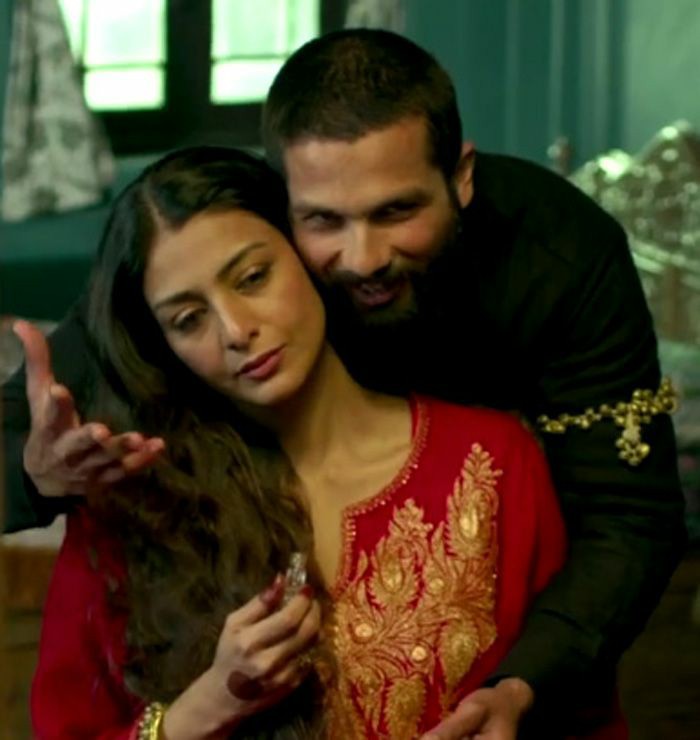
The two most important characters from the film, Ghazala and Haider.

Haider, a film adaption of William Shakespeare’s Hamlet isn’t the first time Vishal Bharadwaj expressed his love for shakespeare’s writing but surely the first time he used a gravely complex political (and world) issue of Kashmir, for which he should be lauded. If you read or have read Hamlet, you will see how supremely infinite possibilities exist of its film adaptation. But fitting it in the backdrop of a real situation with so many political narratives, and literally going all out to portray young voices of Kashmir, is a bold move, and that too in 2014 which was just six years ago but painfully, the commercial film industry in India wasn’t as bold. That said, it is also a hard truth to gulp down that Shahid Kapoor did this film and when the industry is finally speaking up on humanitarian issues, did Kabir Singh. 

The film unfolds with Hilal Mir (Narendra Jha), a doctor who helped out a militant in need of medical treatment and hence, lent him his own roof. Moments later we see his house blasted down to shackles, and despite trying not to go political, in one flash I was reminded of Dr Kafeel Khan, another man getting punished since 5 years for doing his job. With a simple google search you will know who and what I am referring to here. Moving on, post this debacle, Haider Mir, the doctor’s son returns to Kashmir and finds himself greeted with his father’s absence, his home in tatters and mother Ghazala (Tabu) least bothered by it all brewing romance with Hilal’s brother Khurram (Kay Kay Menon). That is what sets off the story of a rebellion headed by Haider and meant not just to seek justice for his father’s murder but subconsciously to make our minds churn and make us wonder about how important yet misused the Indian youth is. 

Back when it was released I saw Haider but little did I know how important is this scene

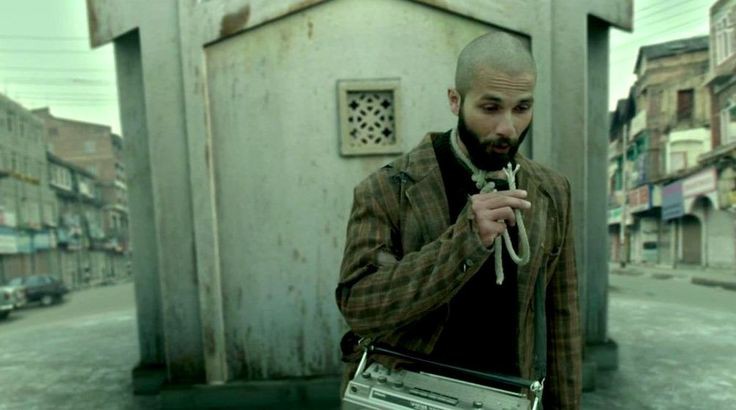
In the most iconic mid-street aazadi monologue by Haider, what was noteworthy to me was how cinema dared to speak up against the atrocities faced by people who harmlessly just happened be at the centre of a political propaganda of two countries, living life. If this was parallel or art cinema, this would hardly have been anything new but since its commercial, the impact and reach was two-fold. In essence makers like Vishal Bharadwaj aren’t legendary or great to be taking up such stories because that is how it should be, isn’t it? But it’s the lack of such initiatives that makes this one outshine mediocrity. 

There are many seemingly harmless characters like the Salmans (Sumit Kaul and Rajat Bhagat) in this film too, whose death feels wrong and inhuman even though they sided with the wrong ones. Do you know why? It is because we are shown that their actions weren’t a result of choice but a will to keep their lives saved. Another narrative that made me wonder what is it that people of Kashmir can do and not be called out for? Not much I guess!

Marke hi pata chalta hai ki zinda rahe to jiye nahi aur mar ke bhi bache nahi

-Haider Mir

Talking about the two most important highlights of the film; acting performances and Vishal Bharadwaj’s music, I would only like to say that Tabu is literally the life of every frame she captures, Kay Kay Menon as Khurram and his sexual tension with Ghazala is so wrong yet deserves countless lauds for how its portrayed. To state the obvious, Haider is Shahid Kapoor’s career best performance and it shows why he is Bharadwaj’s favorite; his conviction to Haider’s role is spellbound. Khul Kabhi and Jhelum are two of my most favorite tracks from the film. Since the latter is rather unheard I would recommend lending it an ear. 

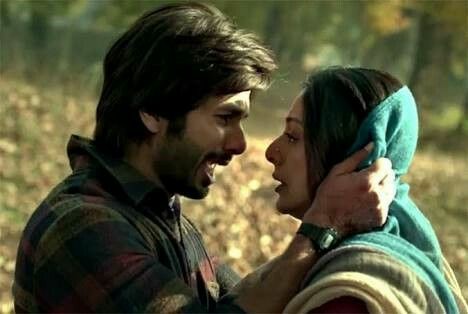
This still is right after Haider and Ghazala take a walk talking about Hilal. Shot in one take this still gives me shivers

Haider in its entirety can have many interpretations. What’s yours?

Gunjan Saxena: The Kargil Girl, a biopic that aims to change narratives altogether, but also falls prey to stereotypes of commercial filmmaking

Right when Gunjan Saxena is on the brim of her work excellence wanting to soar higher, serving in the Kargil War, we see a politician on TV proposing to bar women from the Indian Air Force given their ‘safety’ and how if anything bad happens to them, it will bring shame to the country. This immensely illogical argument wrapped in the pretense of making sense, is why Gunjan Saxena: A Kargil Girl becomes an important film after all. 

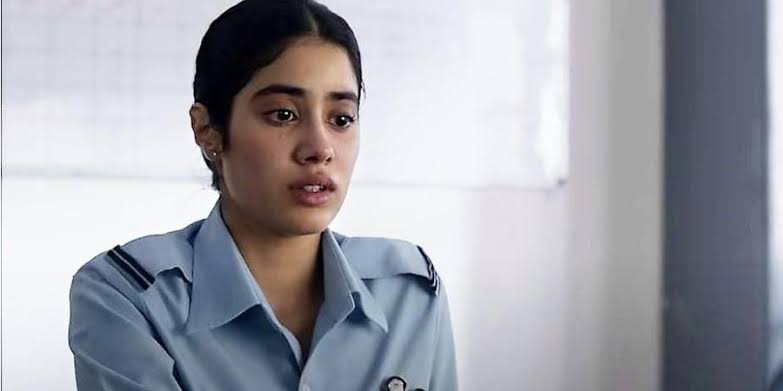
Janhvi Kapoor as Gunjan Saxena

Helming a constant narrative of feminism through a groundbreaking story of the first woman who got in as flight commandent in the IAF, the film centerpieces Gunjan Saxena (Janhvi Kapoor), who after a small anecdote in her childhood, only dreams and breathes to fly a plane someday. This unwavering zeal doesn’t see gender roles as an obstacle, but also doesn’t see anything other than becoming a pilot as motivation. The latter is the second most prominent narrative in the film: serving the IAF to fly a plane, and not for patriotism per se. This right here is why I’m glad her story is told now, at a time like this when this narrative isn’t a crime or an impossibility. 

The opening sequence of the film, just like its title stems around The Kargil War, and that might make one assume it as a war film. Deliberately, it is not one. The war here is the backdrop to Gunjan’s story and through her, the story of so many women who just dreamt and made something happen. I just cannot talk about her victories without mentioning the beauty named Pankaj Tripathi, who plays Gunjan’s father in the film and is unknowingly but unapologetically a feminist, who I keep wanting more from, and there just aren’t enough awe sequences with him in frame, and there never can be. His versatility clearly knows no bounds and this film is just one speck in a universe full of his best works. 

I sadly cannot say the same about Jahnvi Kapoor here. She stops seeming like a misfit after a point. There has been a lot of time given to the audience to know Gunjan completely, and once we do Janhvi’s portrayal doesn’t seem so bad. She either acted like she did because it fit the timid, shy yet childlike personality Gunjan had, or she got saved with her bland and repetitive performance because it bode well with her role after all. Either way, it is hard to hate her altogether in this film. 

Treatment wise, the film does include some stereotypical ways of engagement as found in most commercial films these days. But as the film proceeds forward, this too keeps disappearing. Like when she enters the IAF and faces sexism all the way, the representation might seem too shabby and poorly researched as well, but when she gets called out for having lesser air hours when she was not even allowed to fly, that is when the trajectory of oppression anywhere is given importance. 

To sum it up, Gunjan Saxena: The Kargil Girl says that excellence in any field doesn’t require imaginary institutions of belief, like patriotism in this case, but only a will to learn something and perform. For me, Gunjan choosing IAF as the best replacement of her being a pilot, will be a big breakthrough in the process of minimizing forced nationalism through films.