Kramer vs Kramer; legal custody battle story, with slightly problematic undertones but highly important overtones

Ordeal lies in the root of Kramer Vs Kramer, because this Academy Award winning film doesn’t even have a dignified opening ‘sequence’ of sorts, which is quite rare to see in a film shined on by the likes of Meryl Streep and Dustin Hoffman, but which also turns out to be a meticulous technique to signify how deeply connected is it to real life, that doesn’t ever specify when it will fall apart.
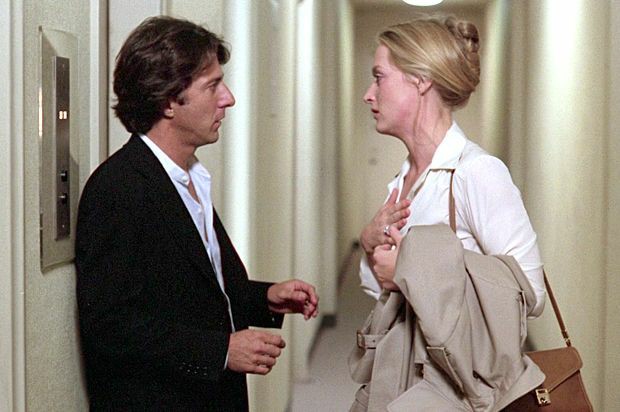
Dustin Hoffman and Meryl Streep in a sequence from Kramer vs Kramer

Kramer vs Kramer as the name suggests, is the story of a legal custody battle between Ted Kramer (Hoffman) and Joanna Kramer (Streep)  who long for happiness and solace, which they both look for in their little boy Billy. 

The film is quite ahead of its time, because it doesn’t use stereotypical narratives like domestic abuse, adultery or constant fights to justify a couple splitting up. Nor does it use other kinds of stereotypes like mutual consensus. Instead, the couple breaks up through the standpoint of the wife who seeks independence and love, and more than blame it all on her better half, states that she needs to find herself and seek respect from within, something I surely wouldn’t see in films from the 70s. That doesn’t mean though, that the film doesn’t get problematic as it unfolds. But what my outtake would recommend you is to try not to look at it through the feminist lens. Yes it might seem problematic and sexist too on many levels but custody battles seldom leave out any form of disgust. So yes there is anti feminism but the director shamelessly comes out with it because otherwise he can’t show the truth. It’s not glorification. It’s facts.

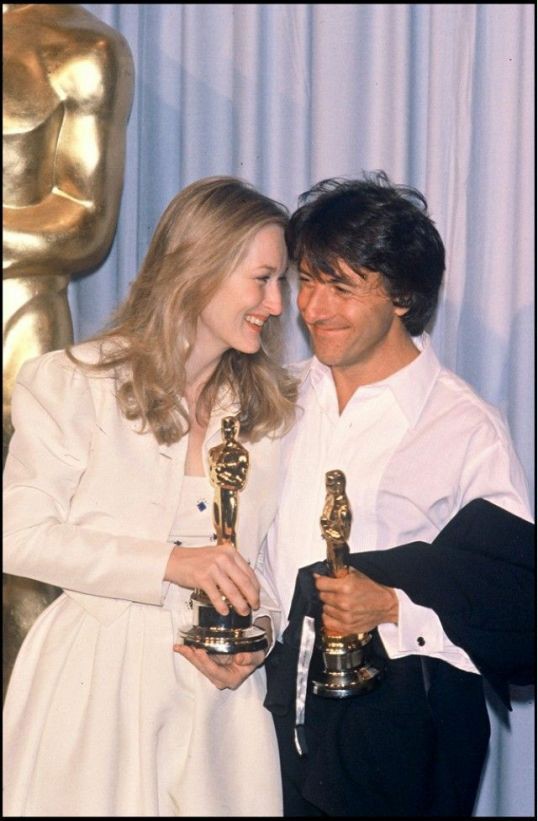
Dustin Hoffman is beautiful and so human as Ted, who isn’t apologetic when he needs to be, but subconsciously tries to mend things any which way he can. The Graduate surely isn’t my favorite film of his now. It’s this. Precisely why he won the Academy Award for Best Actor for this film, alongside Meryl Streep who also won Best Supporting Actress. Stating the obvious, Streep like all of her roles plays Joanna to perfection. It’s hard to overlook her capabilities as an actor, as her performance is always timeless. She surely knows how to own the frame. She’s mostly present in the second half but dominates the entire film at large.
There are series of points and counterpoints from every side leading you to believe that one is going to win or you are somehow to pick one side as the viewer. It’s only later that you realise it was never about right and wrong. It was about ill timings and ignorance that leads to a break in relationships. It is a very simple story if you come down to it but yet it feels complex and gut wrenching almost symbolically hinting at how gruesome real life can get.

There’s a lot you wish you could change but can’t. Some things, once they’re done can’t be undone

– Ted Kramer (Kramer vs Kramer)

Child actor Justin Henry as Billy is quite efficient in his portrayal of little kid trying to understand his parents getting separated and the gradual development of his relationship with Ted is amazingly poignant.

For sure, the film talks about gender roles and as stated above, the inability to take sides as a viewer is proof of how these roles defining parenthood are extremely problematic and unnecessary.

Another due applaud to the makers would be highlighting gender stereotypes through subtleties, like when Ted goes to attend Billy’s performance at school or when he goes to pick him up from a birthday party, all we see around him are women or mothers, and the only thing making Ted do all this is Joanna’s absence. This commentary on societal definitions of ‘normal’ is powerful.

Kramer vs Kramer is an important film at large, and even drives attention and interest right from the very beginning, but honestly, Joanna gets too apologetic, more than she should be. In that respect, the film does put across a wrong message even if it doesn’t intend to.
Use of entertainment to highlight an important problem; Kamyaab serves its title

Kamyaab is essentially a much needed break from the regular commercial cinema that mainly works on targeting indian people’s mind and what they perceive apart from making money of course.

Kamyaab is a film that revolves around a subject people really don’t care about but the filmmaker wants to become the voice of so many who are part of this ugly reality, and show the country what they conveniently ignore.

The film skips out some important undertones of the subject, but assesing it through the perspective of an initiation, Kamyaab does a good job

The ‘ugly reality’ of sorts here is the wrath caused upon the ‘sidekicks’ in Bollywood who play very important roles in films, but in the end are left with nothing more than some iconic lines or characters they played and depend on these sketches to be rekindled in order to be remembered. 

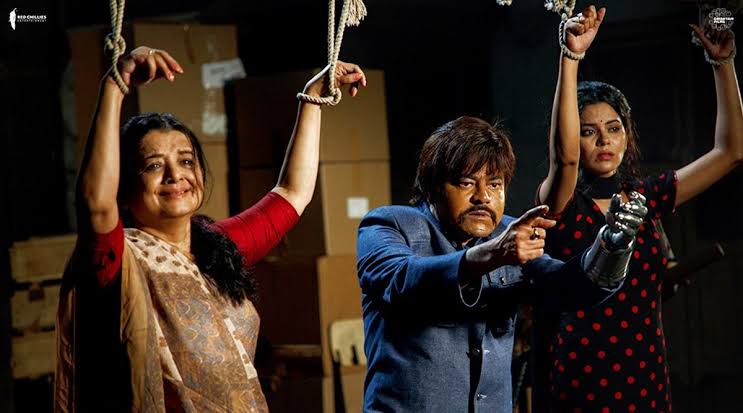
More specifically, Kamyaab in the story of Sudheer (Sanjay Mishra), a forgotten side actor who one day comes to know that he has worked in 499 films and immediately pledges to do another memorable role in order to complete 500 and hopefully set a world record.

Kuch nahi bas enjoying life, aur option kya hai

Sudheer

Stating the evident, it is quite remarkably refreshing to see Sanjay Mishra play this role who in real life sure doesn’t exactly fit into the character window of Sudheer but also hasn’t been thanked and appreciated enough for all that he has done for acting and cinema just through his presence. His roles, even though aren’t that cliche, the reception sure has been. It would have been a disappointment to see a leading actor play this part and pretend to live through a journey he couldn’t possibly imagine being in. 

Kamyaab pertains to two starkly different realities of being an actor. By representing one, it gives us an idea of how ghastly different it is from the other. Nonetheless, the film does lack in portraying a very important side to this; the financial aspects.

Sudheer and his struggle to find the 500th role is solely because he wants to and doesn’t have monetary implications. It ceases to depict how finding a footing in the industry is a matter of life and death for most. But to be true, the merits outnumber the fallacies with Kamyaab.

The fact that this film got released under Red Chillies and still wasn’t appreciated or viewed as it should’ve been makes me wonder if it’s just the makers responsible for degrading commercial cinema or is it us who won’t accept commercial cinema without the gimmicks and cliches that we seemingly oppose.

On the other hand, it is also quite possible that the film didn’t exactly cater to make money or exactly ‘please’ the public by adhering to its stereotypes, and a very big proof would be the absence of popular faces or unnecessary guest appearances. Literally the entire cast of the film didn’t helm from any prior privileged background of bollywood and that is an achievement on so many levels. Not once did I even subconsciously feel the need to see a “popular” face.  

Broadly speaking, Sanjay Mishra wasn’t at this career best but it was so damn important to make a film on “side kicks” and bring to light a very different chapter of being in the industry 

Dunkirk; Narration of a historically important episode, using tools of cinematic excellence

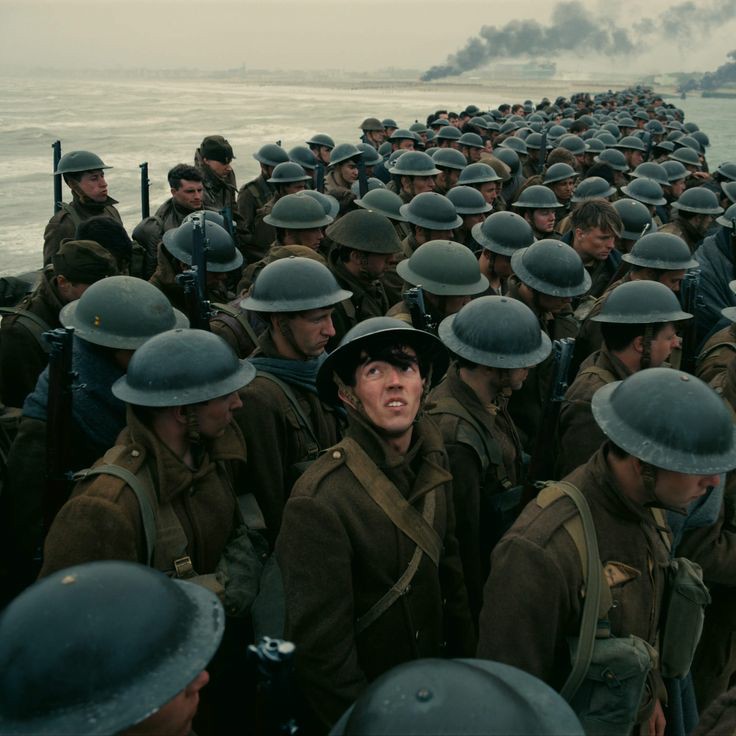
Beautiful french streets, a bunch of soldiers and one of them picking up a long pipe in order to take out one drop of water out of it; the opening scene of Dunkirk is of the best impressions of signifying wrath in the face of beauty. 

Although a war film, more than just the idea of being patriotic, the film also subtly unravels the impact of politics on war

As I delve deeper and deeper into Christopher Nolan’s Dunkirk, I interface with new avenues of brilliance. It’s isn’t like I didn’t expect marvel just at the mention of Nolan being director or the exuberant cast of the film, but there’s only so much you can expect in prior, rest is all served up eventually as the film unfolds. Some might call the film tedious or slow or some other non-criticial form of it taking time to lay out the story, but from where I see it, I find it worth my while.

Dunkirk films out the infamous episode of the British soldiers’ evacuation as they face consequences of the war with France as part of WW2 in Dunkirk. As they direly wait for their troops to rescue them, both them and the rescue team are faced with unexpected outcomes and although this attempt is met with some success, it does leave behind immense collateral damage. 

Interestingly, the filming is done through three different stand points of the air force, the military on land and the rescue ships in the sea, and hence the unexpected is performed by Nolan, through the inclusion of non-linear editing in a war movie!

As soon as I realise what is going on, I couldn’t decide what to be more shocked of; the series of events unfolded or the fact that Nolan managed to do what he is famous for, and nail the writing!

Needless to say, the cinematography is what makes Dunkirk the exceptionally phenomenal film that it is. Cinematographer Hoyet Van Hoytema, who also assisted Nolan with Interstellar does a fine job by encapsulating the emotions and fear of war, and does so mainly through long shots and tons of them. Sure, the three perspectives as mentioned require him to do so, but it never seems like compromise. 

Talking about the ensemble, I did judge the casting a little bit when I spotted Harry Styles but man, did he amaze me by the end!

You can sure not miss Mark Rylance as Mr Dawson, continuing his charm and simplicity leaving me reminded of this role in the Bridge of Spies. That reminds of a rather peculiar episode between George (Barry Keoghan) and the soldier (Cillian Murphy) on board and how effectively it brings forth two quite different effects of being in war. While with the soldier, it’s fear and longing to be home, and with George, it’s the satisfaction of being part of something significant. 

The only regret I have is, not being able to watch it on iMax, and the fact that my potentially pea sized brain failed to connect the dots due to the way it’s edited.

All in all, Dunkirk is a grand experience and it is important to stay focussed to be able to contain all that the film has to offer.

If ‘art being romanticized into cinema’ was a category, Portrait of a Lady on Fire will be one major submission

It doesn’t quite happen these days that I stumble upon astounding films like Portrait of a Lady on Fire that make a beautiful example of themselves, and whether you want to or not, leave behind a permanent mark on a mind that thinks and breathes cinema. To be honest, I don’t even consider myself a person worthy enough to give a review of sorts to this unspeakably poetic film, that not only signifies art but also fits it into the window of an informed storytelling narrative that for one, isn’t likely to be the optimal choice for viewers who seek pace, but also manages to keep them grabbed because it justifies the time it takes to build characters, and all the elements it constitutes of in the process. 

There’s a weird sense of belonging that every artist or lover will feel upon getting totally engrossed in this film

Directed by French screenwriter Celine Sciamma, Portrait of a Lady on Fire, as the title suggests is the story of what led Marianne, a young painter to paint this portrait of an aristocrat Heloise, which unlike others, shows Heloise facing the high tides under moonlight with her gown on fire. Although the film is established around this plot, what unfolds is even deeper and more meaningful than what appears on surface. 

What caught my eye among so many elements was a regular focus on painting as an art form, so much so that important dialogues and breakthroughs in the film take place in the background as Marianne paints the portrait. The subtlety with which the relationship between Marianne and Heloise is romanticized, is neither preachy nor is intended to enlighten but still leaves me teary eyed. All jam packed in an overwhelming framework of the 18th century France, the film to its core is rather driven by human emotions, love and passion. 

In a sequence from the film, we see silhouettes of Marianne, Heloise and her maid Sophie walking at dawn to a camp fire, that was indicative of such liberty, independence and warmth women can feel around each other if they decide to lift each other up just by being present. 

Not to mention, Sciamma’s cinema has always been constituted of feminist undertones and celebrates female sexuality, and likewise Portrait of a Lady on Fire is also full of this energy. 

To conclude, it hardly feels like the film is carried forward by one character, or one plot/subplot or one element. Instead, it is driven by conversations, art and the social dilemma and the inner joy of falling in love with the same sex and being a woman. 

One of Bimal Roy’s best so far, Sujata manages to say so much through cinematic elements, that mere words today cannot

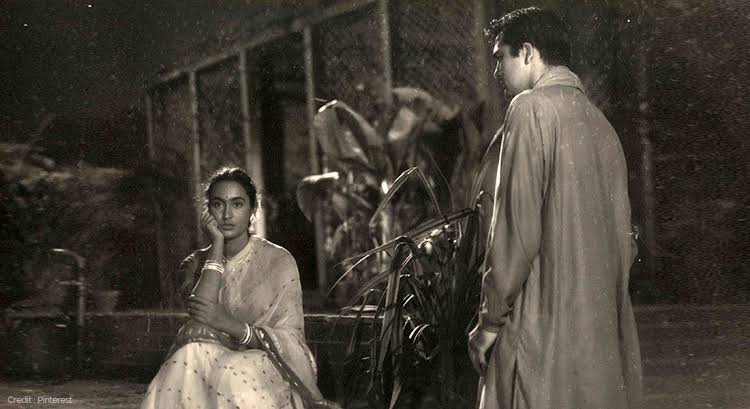
In order to tell her untouchable adopted “daughter-like” figure Sujata, about why is she different from all other upper castes in the family, Ammi uses the phrase “log toh tumhari parchai tak apne upar padne nahi dete”. And exactly at that moment, Sujata’s shadow cast on both walls adjacent to her moves away from Ammi as she does too. And this is the extent to which Bimal Roy uses cinema and symbolism to signify the tension on screen, and this case it almost mocks the irrationality and irony of the caste system.

There isn’t enough courage and poweful storytelling as found in Bimal Roy’s films, considering the time, filmmaking techniques and character sketches used.

Mind you, the film came out in 1959, a time when untouchability was in practice in every household, quite like today but didn’t hide itself behind garbs of ‘open-mindedness’ or ‘acceptance’ of sorts. 

Let me first layout the plot of the film; the film helms the story of Sujata (Nutan Behl), a lower caste untouchable, who is stranded all alone in the world after her parents’ demise and an upper caste Brahmin family adopts her for some time hoping to get rid of her soon. But to their dismay, nothing falls in place and Sujata grows up with them. Later, she falls in love with Adhir (Sunil Dutt), a Brahmin boy who was supposed to get married to their real daughter Rama (Shashikala). And what follows is an excruciating story of how caste plays a role in making life hell for Sujata and Adhir. 

What is so pleasant to watch is the absence of unnecessary stereotypical subplots like a rivalry between two stepsisters over a man. Roy never divulges from the issue at hand, and while he is at it he breaks other stereotypes of mainstream cinema as well. But yes, it can also not be denied that maybe the lack of exposure to underlying problems pertaining to the caste system, the film somewhere reinstates the problem it achieves to solve. In a scene Adhir tries to make his Nani (Lalita Pawar) approve of Sujata with the argument that since she has grown up in a Brahmin household, she is in practice, a Brahmin too. The argument might eventually make things easier for Sujata, but sadly not for the caste system since it essentially means that caste is a derivative of people’s character.

Since it is close to a heinous crime, I simply cannot review any film from the golden age without talking about its music. The film isn’t quite taken forward through its music but two of my all time favorite songs ‘Jalte Hain Jiske Liye’ and ‘Kaali Ghata Chaye’ belong to this film and I can’t be more grateful to SD Burman for it. Stating the obvious, Sunil Dutt and Nutan make a beautiful pair and every sequence they’re in naturally becomes my favorite from the film. 

One can never imagine how much Sujata’s narrative must’ve been frowned upon, in a country that wasn’t quite ready to admit its internal toxicity, in the name of religion, where practicing the caste system was law of the land. Yet, it gives me immense pleasure to know that filmmakers like Bimal Roy, who could’ve used the still budding Indian cinema for more commercial messaging means, quite responsibly used the platform to change the discourse of communication and embark upon change. 

Crash: Makes you question your claim of not being a racist

When you hear the word racism, what mainly pops up is the time of apartheid. Even when you see a mention of racism and discrimination in history books, it mainly revolves around African slavery by the Europeans.

When you watch Crash this little bubble of comfort that racism is only restricted against blacks, breaks open and let’s you witness the reality.

Crash might seem a tad too politically correct, given how safe the tones of narration are. Nevertheless, it is an important film.

It sounds pretty ignorant of me to refer to black racism as a comfort cocoon but don’t get me wrong. When a problem seemingly appears to be confined to one particular group, it subconsciously feels easier to deal with, and frankly feels safer if you’re not a part of that group

Crash tells you what the original idea of racism has caused in the world, permanently.

Crash can be categorized as a composite film set in Los Angeles, California and deals with lives that constantly one way or another end up being racist and victims of racism, all at once.

The film begins with two black guys talking about how differently they are looked at because of their color, and the next second they take out a gun and rob a vehicle of a white couple who gave them looks.

What happens in this scene is not defamation of black people but the dark realization of how one can realise the problem and be a part of it at the same time, just like the viewer who let’s assume, knows it’s wrong to be racist but immediately judges the entire black community post this scene.

This is what director Paul Haggis successfully achieves by making the audience question their own principles.

Coming back to my initial narrative, Crash represents racism throughout communities, Mexicans, asians, persians (because they were assumed to be Arabs) and blacks, and still leaves out the white race. What does it tell you about white supremacy? What you already know!

Moving on, the film is composite for an obvious reason to link stories subtly and apart from that to tell you how racism towards one community stems out from another. In history, there is only one chapter of racism but in the present it stretches out to almost every community, and that has happened because of the core narrative of racism: discriminate.

Crash is an eye opener for both racists and hoarders of equality. It doesn’t justify any problem, but only asks us to be better judges of a situation.

The film has empathy, devastation, sadness and leaves you with an empty heart.

Watch it if you’re ready to let the film hit you in your most uncomfortable spaces.

Room; the bitter-sweet experience behind the joy/dilemma of getting to know the real world

It doesn’t take long to get the idea behind Room, or so you think. Looking at a confined closed space, home to a mother and her 5 year old son, who go about business as usual besides not being able to ever go out and the only idea of ‘outside’ for them is a roof window.

Frankly, my first guess was something post apocalyptic. No, normally one wouldn’t think so but I delved into the film right in, and had not the slightest clue of what it is about.

Room is possibly the most honest take on a mother-child relationship of this kind.

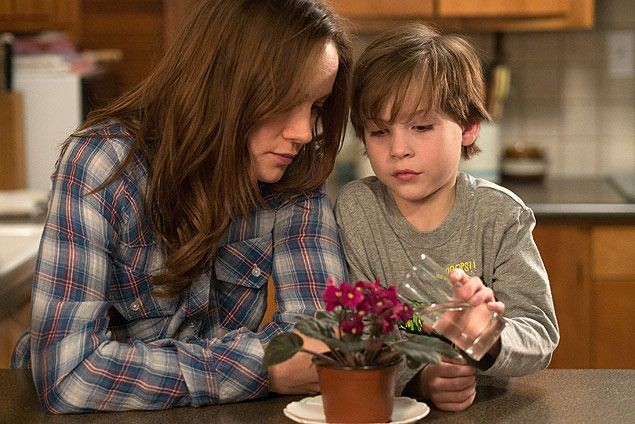
So, here is the plot of the film. Room is the story of Joy Newsome (Brie Larson) who gets held hostage and eventually raped by a man who locks her up in his garden shed (room) for seven years, where she gives birth to her son Jack (Jacob Tremblay), whose idea of the real world is that room until one day both of them break free, and instead struggle making amends with the real world. 

Based on Emma Donoghue’s book Room, the film showcases a tremendously astonishing journey of a little kid trying to forget all what he knew about the world for five years and replace it with reality. But here’s the thing, Room almost poetically makes one think whether this world is real or not, or are we all kept here away from the real world. Sure this idea wasn’t intended but my mind wanders, and so will yours if you ponder over the intricacies of the film.

Director Lenny Abrahamson uses hand-held fast paced shots in the beginning of the film as we get to know about the room, almost as if suggesting that this is pace works in this space, where a mother longs for her old life and a son literally thinks that out of this room is outer space. 

Room holds attention through its camerawork, that gets berserk and trembles, and makes the viewer adapt to the tone of the film, with ease.

Room tells you so much about immense possibility and consequences of something like kidnapping, through the lens of a five-year old, something I haven’t come across in a long long time.

Jacob Tremblay is beautiful as Jake in the film and his character shapes up so deeply and takes time to build up as it goes.

Brie Larson got an Academy Award for this one, and whosoever gave up on her too along with Captain Marvel is going to regret big time, when he spots her owning Joy Newsome’s character. Her playing a helpless girl and mother, is the closest to portraying the state of mind of a mentally and sexually harassed person.

Jack missing his room where he was held out of will, is an eerie example of how comfortable any surrounding can get if the illusion of it being “home” is fed to us. There’s enormous love, affection, warmth as well as devastation in the film.

Caphernaum: A film that will show you what naked eye cannot.

Often in life we find ourselves lost in oblivion of sorts, thinking that this is it, this is the end to all saturation levels man could ever achieve. And this oblivion of sorts is broken to pieces with a film like Caphernaum that hits you in the gut and says, “saturation point eh?”. It makes you discover your entitled self you never thought existed.

This is not a piece that tries to belittle your personal problems but wants to tell you what real existential problems mean.

Zain’s unintentionally attained maturity is proof that need isn’t just mother of invention, but so much more.

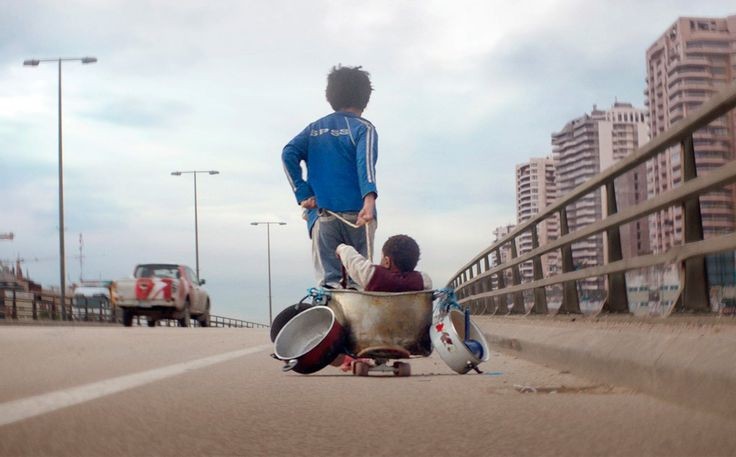
Caphernaum is the story of Zain, an illegal Lebanese immigrant living in Beirut, belonging to a family so poor, that doesn’t know what will they do tomorrow to earn a piece of bread, a family in tatters knee deep in illegal activities and responsible to feed 8 stomachs each day. 

The film basically shows what made a 12 year old boy appeal to sue his parents in court.

The film never appears to be shot, but captured. All the elements bringing up the film scene by scene mainly point to it’s beautiful cast, not to mention Zain Al Rafeaa who plays Zain. 

The film is an honest representation of life, big and small. Thousands of years after evolution it’s surprising to see families with a constant aim in life: Survive.

A very important aspect of the film is Zain’s kind heart that bleeds for her sister as well as an infant he barely knows. One common connection? They both show him affection, and this 12 year old who is already a 30 year old mature adult in his brain, still only craves this: Affection.

Zain blames his parents for bringing children in the world they can’t feed or bring up, but do you totally bash them? No.

That is the beauty of the film. 

It keeps you in a constant circle of cognitive dissonance and leaves you weak in the end, scared to the core, your heart longing to help everyone in need but you also know you’re only gonna crawl back to your privileged cocoon.

Cinematically speaking, the film has beautiful shots or maybe it’s just Director Nadine Labaki’s vision that brings forth the effortless relationship between a boy and an infant on screen. In the beginning of the film, there are many many long shots of Beirut and the locality where Zain lives, only to tell us and remind us what we’re about to get into.

Remember watching films on apartheid and partition with the subconscious comfort of it all being in the past? Caphernaum won’t give you that comfort too, dwelling upon a chapter from the lives of people that currently reside around us, but we’re still too ignorant to notice.

Endearing, kind and full of acceptance; The Lunchbox is all kinds of beautiful

It should be utterly moronic and ignorant of me that I wilfully proclaim myself as a film admirer and it wasn’t until a few days back, that I watched Ritesh Batra’s The Lunchbox. 

As beautiful as this film is, in this review I wouldn’t tell you what you already know, assuming many of you might already have seen it. Instead I will try and lay out some peculiar nuances from the film that happened to leave an irreplaceable mark on my mind.

Accidents seldom turn out to be so beautiful

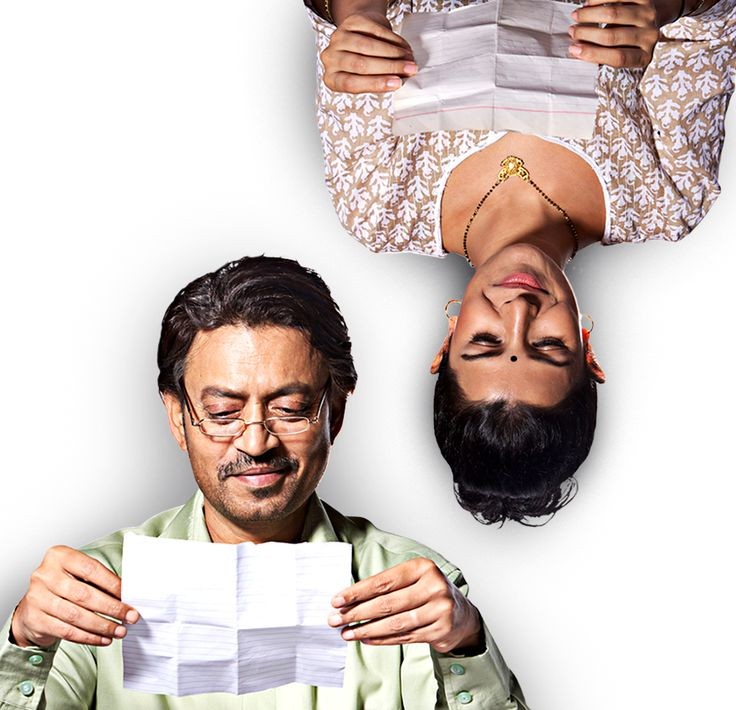
Before I begin, here’s the plot of the film. Set in Mumbai, The Lunchbox shows Ila (Nimrat Kaur), a housewife cooks food for her husband and tries to reach it to his office through the dabba service, but instead it reaches Mr Sajjan Fernandez (Irrfan Khan), an employee of some other office, and this is how a communication, a friendship begins between the two, solely through the love for cooking and sharing thoughts and ordeals (if any). 

Now coming back to what I initially proposed, there are some very unique elements I came across with this film.  Symbolism sure is used, with Ila still listening to the radio for cooking recipes even in the modern times, indicating how old school she is. To be true, everything about Ila’s personality reeks of immense maturity and stability of the mind, something she might not fully acquire, but surely reminds herself to not forget. Her expectations from life are as basic as having someone to talk to, and having someone appreciate her love for cooking and seeing her not even get that so easily sends out a strong message of how low can life stoop to. 

The high point of the film, is everytime Ila has a conversation with the invisible but so relevant and warm, Mrs. Deshpande. Her voice and the tokri she drops down are the only two indications of her presence, all throughout the film! I have never come across a film as successful in making a character like this sustain so beautifully.

Beyond everything else, The Lunchbox is about the little things Ila and Saajan share, even before they share their names to each other, and having witnessed this cinema makes me so full and pumped up in my heart. 

Hamid; a visual representation of what raw and pure looks like, stuck in evil and bureaucratic

Whether or not political inclinations drive your interest, whether or not innocence of a child drives your interest, whether or not theism drives your interest, Hamid is a film for you. 

There hardly exist films that have the ability to draw close literally everyone, despite not being commercially produced or served up with blatant narratives of love, filthy richness, or nothing even close to reality. 

Hamid’s character in the film is the easiest portrayal of what life looks like before reality hits

I don’t say this because Hamid got well received or hugely viewed but watching that film didn’t make me lose attention or empathy for any of it’s characters, just like director Aijaz Khan intended.

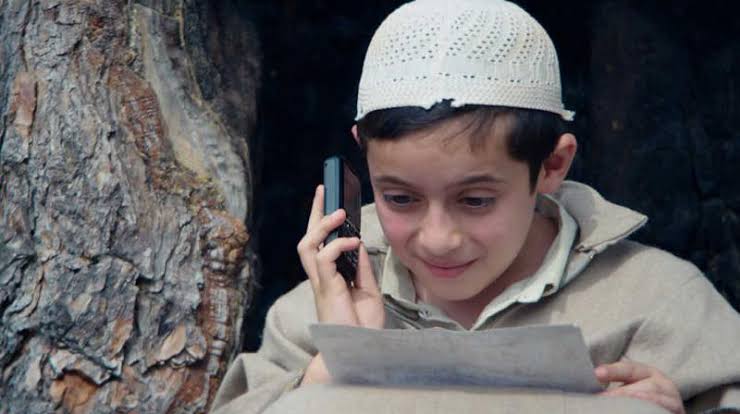
Hamid is the story of a little kid called Hamid (Talha Arshad Reshi), a resident of Indian occupied Kashmir whose father Rehmat Ali (Sumit Kaul) is missing like so many other residents of Kashmir who are assumed probably dead. But this little kid doesn’t know how to meddle in political innuendos and hence looks out for every hearsay that comes his way, ultimately concluding that 786 is Allah’s phone number and this desperate effort at finding his father, leads him to Col Abhay (Vikas Kumar) of the Indian Army who among everything else is a borderline islamophobe but develops a beautiful relationship with Hamid. 

Many political narratives like Islamophobia, lives in Kashmir, unheard voices of Kashmir, dilemma that the Indian Army is stuck in, and others are subtly and strongly shown in the film. 

All these narratives reminded me of the time post 370 was revoked and a video surfaced on the internet where a man spoke at length about how finally Kashmiris won’t be feeding on stuff for free, and how that is going to make them independent and respect the country. The film made me wonder how easy it is for an outsider to pass comments on the living situation of a land where the special status is all people had amongst the constant patrolling of the army, struggles being muslim dominated and constant questions raised on their faith and allegiance. 

Nevertheless, the film does get a bit too politically correct at times.

Getting away for the unintended bureaucratic tone that this review just took for a while, let’s just take a while to appreciate Rasika Duggal’s effortless transformation into a muslim kashmiri woman as Hamid’s mother Ishrat Ali. Her portrayal of a restless wife struggling to make amends and look after her son, is pure and eccentric.

The concept of Allah or theism in general is so beautifully dealt with, especially how Hamid never forgets to put his cap on, before dialling Allah’s number. Kids and their innocence can turn into a visibly real wish granting factory and it is heartbreaking to see little Hamid come to terms with the reality by the end of the film.

The film reminds me of Haider along with prompting me of the lack of films (or govt efforts) on such topics.

My key takeaways from Hamid would be representations of what is behind the Azaadi that Kashmiris seek and what constitutes it, their miserable ordeals that get overshadowed by the place’s immense beauty and all the power dynamics that surrounds it, and a small kid stuck within all this but who only seeks his father’s presence.

Even though I didn’t mean to get this review political, this is what I’d like to end it with: It almost sounds like a joke now that the government seeks to capture PoK as well when the already acquired territory isn’t quite manageable.