
The film opens with the protagonist talking about her feelings and how she makes sense of all that occurs around her. She begins with the title, “I’m thinking of ending things..”
With little to no clue of what she means when she says ‘things’, this film for the first time hints at the infinite possibilities it is going to make you think of. And just as promised, this book adaptation bodes you in for an excruciatingly dark and terrifying ride. A ride that gets creepier because it feels relatable.
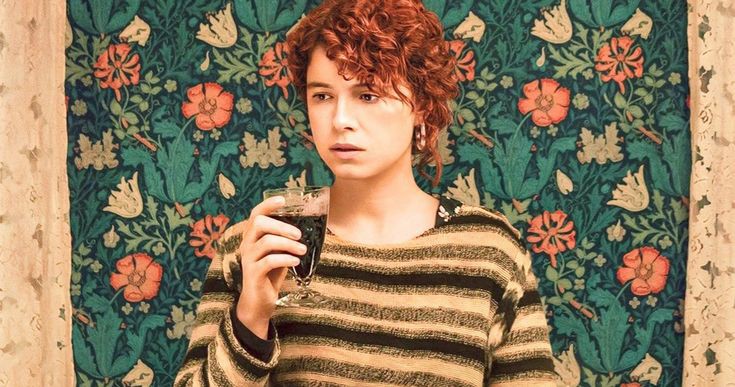
I’m thinking of ending things is the story of Lucy/Lucia/Louise/Amy, basically a woman struggling for an identity and a name assigned to all that she feels and breathes of. Through the perspective of a car ride she takes with her boyfriend Jake, the film literally takes us and puts us in the ‘subconscious’ we casually keep addressing and shows us how cluttered and beyond repair it is or is getting with time. After an uncomfortable car ride to the farmhouse, we’re introduced to Jake’s parents, whose presence feels like a visual representation of all the disgust that married couples keep inside their heads. The film can get too confrontational for some.
Halfway into the film, a loop begins when Lucy is shown coming down from the same steps time and again. Wonder what that is? It’s the cycle we create for ourselves when we stay ignorant for too long, when we believe that the present time is not ideal to act on our feelings. We normalize pain and suffering (both inflicted on us and by us).
Sexism, Feminism, Homophobia, Ageism, Narcissism, Paranoia, Suicidal tendencies, Victimization, need for Validation, Equality. This is a list of concepts the film covers, when looked from a distance. It’s all in the premise. When you look closely, it could go on and on (another loop that keeps reconnecting to some other institution of our being).
Throughout the film, there is a change in the protagonist’s name, profession, interests and they eerily represent or come from what her partner wants her to be at that exact moment. There is a sequence where her paintings are signed ‘Jake’ and she is little to no reaction to it. These are subtle representations of the extent to which she has given herself over.
The acting performances are all top-notch but Toni Collette deserves a special mention for her portrayal of Jake’s mother, a victim of patriarchy who furthers it unknowingly.
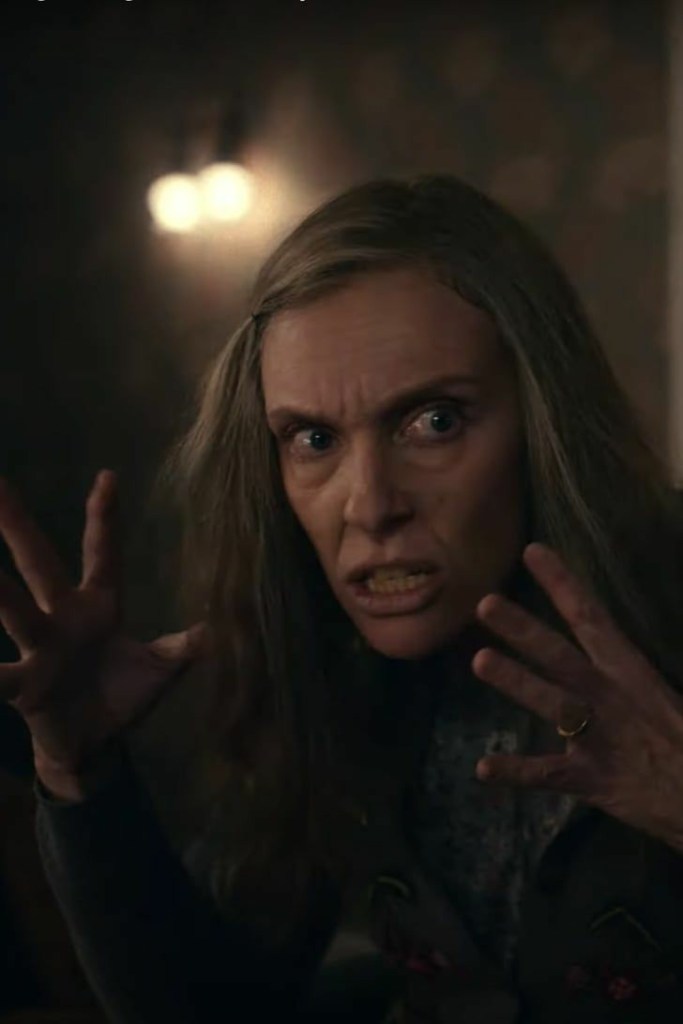
What’s interesting here is that throughout the film, all the concepts stated above are represented through this woman, whether they victimize her at one point or call her out for her condition the next time. Kaufmann has tried to be as human as possible with his direction. Talking about the cinematography, there is a Stanley Kubrick like eeriness to its demeanor. There are glimpses of The Shining or Eyes Wide Shut, with how the characters are treated and how there is no limit to their cynicism. The way it’s written might remind you of Eternal Sunshine of the Spotless Mind, and don’t be shocked when it does since it was Kaufmann who wrote the screenplay for both. His unwavering spirit to capture and present reality is applauding, but especially this film invites many many interpretations. So don’t be quick to decode meaning because it doesn’t have just one. Sleep on it, and you will know what you gathered.
All in all, you could categorize it into a ‘soul searching experience’ but surely one that doesn’t come with good news. And as Lucy says, “Wow is an all-purpose exclamation”, this film is a ride that will make you gasp the same word for different purposes.

 The F Word