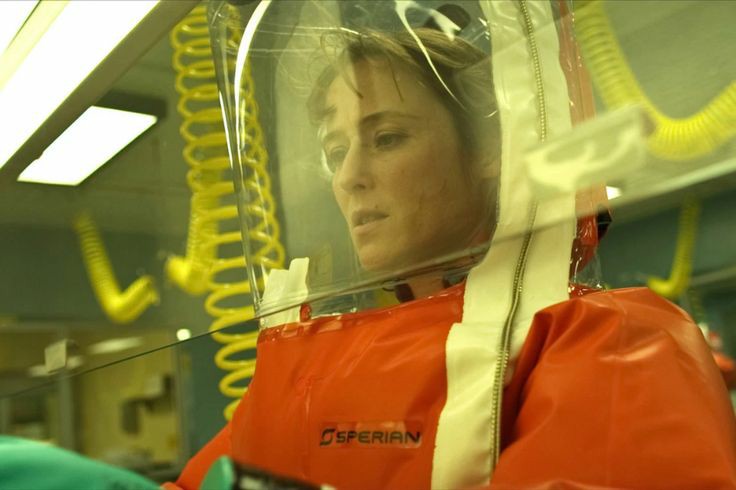
Contagion obviously became a popular watch at a time like this, when everyone on the planet is under the terror of coronavirus or SARS-CoV-2. The film not just for this reason, but also because of the extreme replication of what is going on today, is highly watchable.
From the spread to it’s coping mechanisms, Contagion is too much in line with what the world is facing today.
Even writing the plot of the film here seems eerie to me. Nevertheless, the film is based on a virus that first affects an American woman in Hong Kong and later spreads out to the world becoming a global pandemic.
The film not just replicates the scenario but also tells you where we are right now in terms of progress towards curbing the problem barely 30 mins into the film. So yes, it’s quite scary how much is left to yet be unfolded.
After a point, my mind subconsciously started hoping that I’d able to figure out the actual vaccine of coronavirus by the end of the film.
With an ensemble of Gwyneth Paltrow, Matt Damon, Kate Winslet, Marion Cotillard among others, the film represents a hypothetical breakout that dreadfully seeps in and starts affecting all lives, requiring people to practice social distancing, washing hands and staying in quarantine.
Given that the film came out in 2011, just 9 years before, it is almost as if one should contact the filmmakers to unfold the inception and cure of coronavirus.
Ofcourse the politics involved around a global pandemic isn’t even a quarter to what is actually going on presently. Almost five months in lockdown, the terror is seeping away, even if the virus isn’t.
Director Steven Soderbergh makes sure to keep the viewers at the edge of their seats and makes it too real for anyone watching it.
As soon as Luck by Chance begins, what greets us coldly is a promise that the film is going to be nothing short of discomfort, realism and the ugly reality of ‘Bollywood’ and whatever undergoes the process of becoming an actor and managing to keep your life going. A life that doesn’t ask you to financially lean on to someone else, but in return asks for many sacrifices of your personality and self-respect. But does it keep this promise of delving deeper into the truth? To an extent, yes. Theoretically, it covers all gray areas of being associated with the industry or wanting to be. But in terms of treatment, in essence Luck By Chance is a very commercial representation of an already commercially-driven field. To someone who is already scared of how discomforting it will get, it could be a pleasant surprise, but this comfort does leave out many realities and aspects of this industry.
Luck By Chance also works as a reminder to how powerful Farhan Akhtar and Konkona Sen Sharma are as actors, and that they don’t their due appreciation for it.
Set in Bombay, Luck By Chance tells the story of what goes into making a film and comments on the financial aspects of filmmaking and how is it ruining films as well as the fraternity. Vikram (Farhan Akhtar), a struggling actor from Delhi is in the centre of all this drama and his journey encompasses this story. Now, there a number of things to be noted here; Vikram is never portrayed as a flawless person. His actions might be the result of what the industry demands and defines as a success story, but the choices are completely his. As opposed to the stereotypical assumption that female actors have it easy in films through unfair means, Luck By Chance has a male character fitting this description, who is greedy and opportunistic more than anything else.
The film is also a commentary on how living a respectable life might not come with fame and controversies and how that is better, but often gets compromised. With the film industry as the backdrop, it says so much about sexism among male and female actors, commercialization of films and how it affects content, and so much more. What might seem tricky is a product of nepotism himself play a struggling actor and comment on how star kids find an easy way into films. Another way to look at it, would be people recognizing their privilege and trying to make good use of it. But alas, Luck By Chance remains a star studded film, with guest appearances more than the crores spent on it.
After looking past all the glamour, songs and storylines poured into it, Konkona Sen Sharma as Sona Mishra is the only one that remains in my memory, someone I cannot forget for a few days. I’m always bewildered by her versatility and range in acting. So many actors must look at her and dream big, because she seems like a familiar face who only hones her immense acting talent to make a living, and that is so inspiring!
Shankar Ehsaan Loy’s music and Javed Akhtar’s lyrics will always be a match made in heaven for me. Sapnon Se Bhare Naina is so dreamy and scary at the same time, and Farhan’s effortless portrayal makes it even more tragic in the face of all the hopes and dreams budding actors have.
The opening sequence of Raat Akeli Hai showcases an accident/murder, something that it gives you as a prerequisite in order to further enjoy the film. While the story is well-written and carried out, this initial piece of detail wasn’t enough to justifiably stretch out the story to 150 minutes. This dramatically climaxed film, offers all what it promises, but leaves you wondering if that could’ve been sufficed to a shorter length, given the inability to provide equally gripping narratives throughout.
The film is multi-dimensional but in essence, revolves around the same narrative
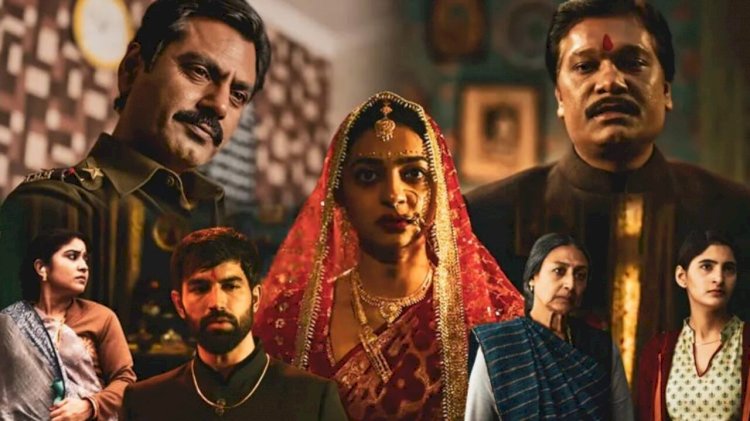
Set in a small town of UP, Raat Akeli Hai tells the story of what follows when a rich landlord gets shot and murdered on his own wedding night. All his family members are suspects including his wife Radha (Radhika Apte) who is now inherited all his wealth. Inspector Jatil Yadav (Nawazuddin Siddiqui) is assigned this case and is determined to unfold the truth, by hook or by crook. Filled with an ensemble of Ila Arun, Shweta Tripathi, Shivani Raghuvanshi, Tigmanshu Dhulia and Aditya Srivastava among others, the casting doesn’t just seem fit because of them being fine actors but also because their presence justifies their character sketches to perfection.
Later in the film, Jatil and Radha develop feelings for each other, which seem unnecessary not because it is a crime thriller and typically love doesn’t really hold a place, but also because the inclusion of this angle isn’t nuanced enough to flow along with other elements of the story. With an already wide range of technicalities to be understood, there isn’t room for one to make sense of this love blooming between the officer assigned and the prime suspect.
Some things are a given barely when there’s news of such projects coming up, and expectedly so there are mentions of many social issues like obsession to fairness or racism, politics and how that effects crime and casual sexism in families that knows no bounds once ignorance seeps in. Director Honey Trehan should be commended for portraying all these elements without any one seeming tedious or out of place. He did a brilliant job on his debut directorial, and for most part managed to maintain inquisitiveness.
Having watched quite a number of murder mysteries and crime thrillers, I can say that the key doesn’t lie in trying to figure out the murderer because any way clues that hint toward the actual murderer are only dropped by the end of the film by which you’re already too invested in the ‘clues’ you picked up which are hard to look past.
Ila Arun as Jatil’s mother is a strong female character. The strength of any character is determined by all it is exposed to, and mothering a patriarchy-driven son (initially), her character should be lauded for outgrowing the stereotypes of her own age and surroundings and shining on. All the female characters in the film for that matter, are strong in their own sense. Some just couldn’t outgrow their obstacles.
For anyone who is watching Raat Akeli Hai just for the climax, you’re in for a good surprise that will make you think and also jump off your seats. After a series of problematic or delusional content, Netflix has finally delivered something worth being number one on Trending.
Tragedy, shortcomings and failure to look past certain institutions, India is a splendid example of this classic recipe to make any country downtrodden or still in terms of growth. But how often do we see these elements or this side of India portrayed through commercial cinema? Cinema that is penned down by ace writers and helmed by mainstream filmmakers and artists? Almost never. But Ashutosh Gowariker’s Swades is one such film that uses stereotypical emotions and attractions for the mainstream audience, but only to direct towards a subject deeper and keener in aspects of national importance and uses art to manifest a social cause or a string of them.
There could be various connotations attached to assesing Swades, but somewhere down the line a good intent would stop sufficing.
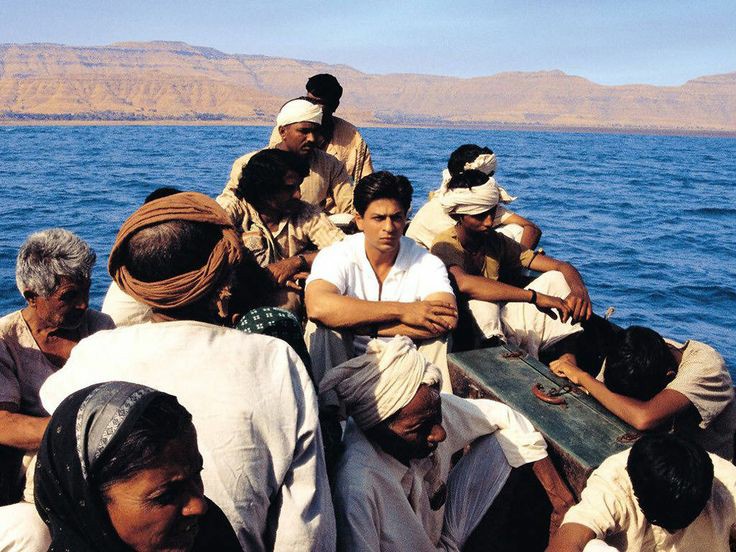
Swades portrays the story of Mohan, a scientist working for NASA settled in the US who misses his childhood nanny Kaveri Amma and in order to bring her to the states, heads to India. There, unlike what he planned he encounters several loopholes preventing the residents of Charanpur village to lead a happy life with basic amenities, and finds that he can be very useful in ridding them of it, if he stays back.
Filled with narratives of patriotism and the regular despising of NRIs, the film does take help of many such typical elements but what it delivers sheerly justifies it all to be honest.
It challenges the caste system but safely skips discrimination towards religious minorities, evidently because Hinduism is in the face of every scene, however tragic some of its elements might be. Mohan’s character isn’t entirely religious and even preaches how culture and tradition are more like roadblocks of development rather than facilitators of it, but the same Mohan preaches Ram’s greatness and is somewhat treated like his reincarnation too.
Swades has a constant focus on jobs, all kinds of it and how important all of them are to make something happen, something worth life.
Everything is put so simply and Ashutosh Gowarikar and everyone on the team should be commended for commercially emphasizing these subjects, while capitalism and mainstream Bollywood only runs away from making effort or even taking account of how the power of cinema to leave impact.
Swades is the pivotal example why Shahrukh khan should win all the debates about him vs some spoon fed manchild of an actor; he not only is self made but also utilised his abilities to embark change, something some people have the chance and finances to do everyday, but do not.
All the actors are so powerful and their characters so well written that they collectively point out the ignored obvious but never really glorify it (not consciously at least) . Back when there was no social media to police actors or makers, Gowariker made sure he would still steer clear of all the stereotypes and call out all orthodoxes.
How can I not talk about A R Rahman’s beautiful compositions and not just the songs, but the background score. If you think you wouldn’t be affected by Bollywood’s idea of tearjerkers, think again! If not the scenes, the music in the background will do the deed. Even though I am a big Rahman fan, trust me this is not an exaggeration.
One can never emphasize enough on how progressive the film is and I wonder if this is why Ashutosh Gowariker is absent from the scene today, because he wanted to be bold in a time where everyone played safe.
To sum it all up, the film is way ahead of its time, 16 years ago no one made speeches about women and their independence, caste system or the fact that India literally has culture and tradition as its defense mechanisms.
If you had a tedious time sitting through Roma, but want to experience the brilliance that is Alfonso Cuaron, Children of Men is the film for you. Don’t get me wrong here. Roma was correctly paced and made suiting to what was needed there and so is this film, it’s just that Children of Men wreaks havoc in its element and nothing can be slow about it. From the beginning to the end, this film is a commentary on so many social evils, not just the ones acknowledged but even the ones that are celebrated in disguise.
A world void of fertility, on the verge of extinction of the human race, but prioritising greed over anything else
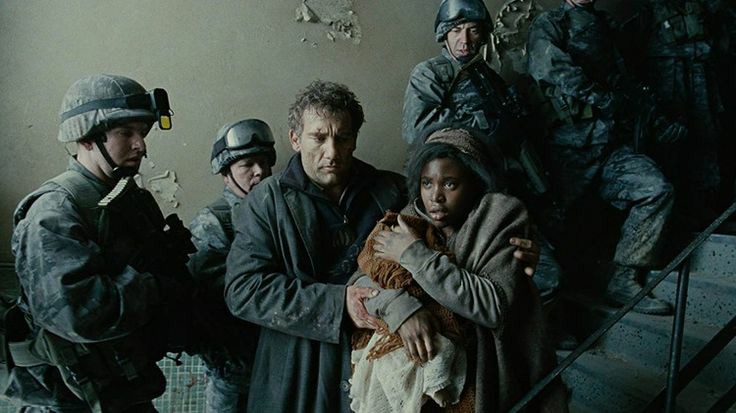
Based in 2027 London, Children of Men is the story of a post apocalyptic world (of sorts) denied fertility and new life since 18 years. A seemingly personal loss, this in fact leaves imprints of devastation on the entire city and the world with outrage from all sides and communities seeking human rights like never before, and a certain clan wanting to turn this too into a capitalist agenda.
Among all this chaos, is Theo Faron, who couldn’t care less about the situation as he believes it’s too late for senses to kick in the minds of people. But his obliviated mind is made to care as he comes across Kiki, who is pregnant ready to give the world a new hope, or maybe just wanting to stay happy with her child.
To her dismay, there are many hungry elements waiting to reap advantages of her situation, or as led by 18 years of dismantled society and injustices prevailing much before that, have become opportunistic of everything human.
Certain institutions the film comments on are capitalism and bureaucracy and subtly hints at how preachers of these institutions cry for help and play victims of a problem created by them systemically overtime. But obviously, there’s mention of religious groups and their uprising, mainly Islam, with slogans like “Allah hu Akbar” chanted in the background when bad guys chase the good ones. This might seem problematic and probably is too, but the focus here is to address problems as well as catalysts to it.
There’s fairly enough mention of the refugee crisis and illegal immigration persisting in this world which makes it seem like people in power only want to target certain groups no matter what the situation and when these groups protest, they’re called terrorists or breakers of peace.
Clare Hope-Ashitay as Kee is heartwarming and her portrayal is both of an innocent little girl and seems mature. She likes to use words in the simple past like “wicked” or “annoyed” as reactions to all this materialistic wants to do to her, but is so tough when she needs to be. In a scene from the climax, with buildings breaking down, bombings everywhere, people going crazy, Theo trails the cooing of Kee’s baby and that is the most beautiful thing I’ve come across in a long while. It symbolizes what people are forgetting whilst fighting for ‘peace’.
Cuaron, alongwith Timothy J Sexton has essentially brought forth a saga that portrays what terrorism or the idea of it stems/would stem from and it is highlighted using the premise of a post apocalyptic world suffering the wrath of infertility for 18 years.
His direction could only be properly justified with the brilliant camerawork by cinematographer Emmanuel Lubezki who has made sure to cinematically as well as realistically make sure that the audience connects well to what the frame encaptures.
The film may not be the regular thriller or fictional creative space you seek. It is much more than that.
The opening shot of the film begins with a skyline view of the city, the story resides in (probably the only time we see it in the bigger picture) and ends at dial 4 of an enormous clock tower of a train station, a kid peeping out of it.
This seemingly varied collection of shots is one take and it does two things; accounts the existence of a fantasy world capturing everything into it, and negates the possibility of anything lesser than perfection upholding the film.
If films about films are your attraction, Hugo can be extremely fascinating for you
Other than that, Hugo is nothing but cinema about the inception of cinema directed by someone who is the flagbearer of good film and aesthetics: Martin Scorsese.
Now, it’s probably odd for Scorsese to direct a film meant for children but as the film unfolds I understand better why he took it up; for nothing but his love for films. As a former film appreciation student and hopefully a potential film critic, I found nothing but awe in the film surrounded with film history narrated through lenses of the present.
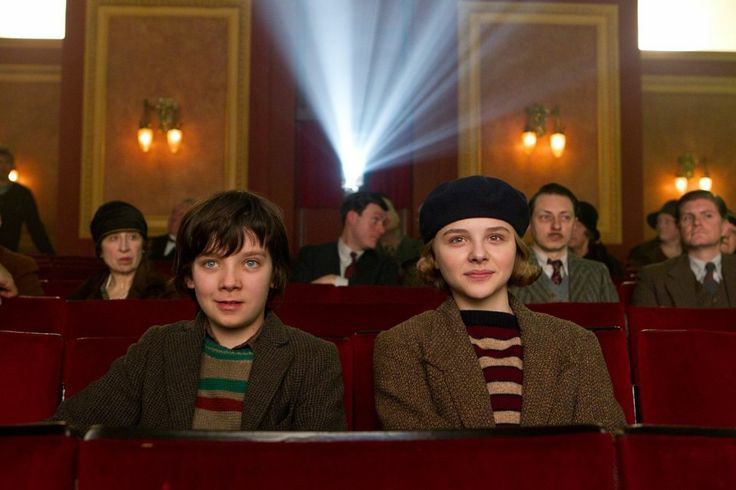
Little kid Hugo Cabret (Asa Butterfield) has just lost his father and right before he died, they collectively worked on fixing an automaton in order to find out what lies in it. In the process, he meets Isabelle (Chloë Grace Moretz) who helps him carry out his search without her godfather George Melies’s (Ben Kingsley) interference. What unravels however is how George is more connected to the automaton than Hugo imagines.
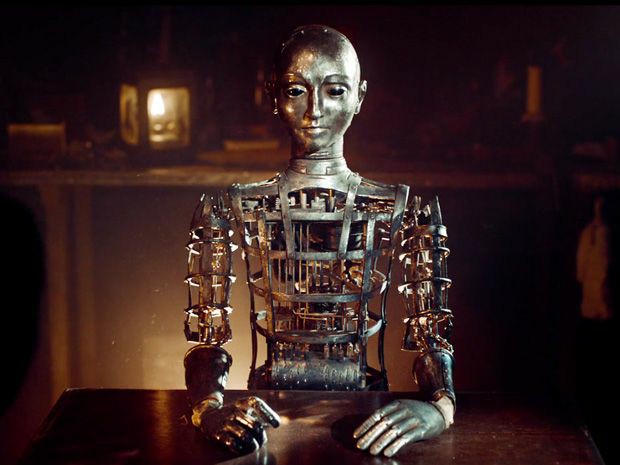
This automaton is peculiarly designed in a way that it reminds you of Fritz Lang’s Metropolis, another pioneer film that is still looked up to, for inspirations.
The automaton featured in the film
Talking about film history, Hugo touches almost every element like the involvement of the Lumiere brothers, the first motion pictures, people’s amazement as part of its reception and of course, a filmmaker’s journey from being popular, to being in debt, to letting go of his passion and being completely forgotten.
Set in the early 1900s, Hugo talks of cinema also from a bit earlier 1900s, as yesteryear’s or categorized as ‘old films’, and that says so much about the obstacles faced by films to finally be recognized as art.
Isabelle, Hugo and the friendship shared between them is particularly unique because Isabelle is a book lover and Hugo is a film fanatic, and just after they’re shown exchanging their interests, they walk hand in hand, and I don’t believe there’s anything more beautiful than this merger of ideas.
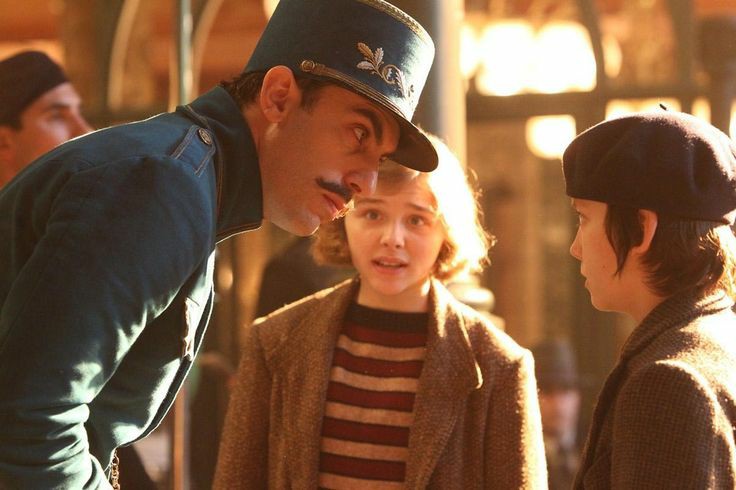
Sacha Baron Cohen as station inspector
There’s also the very talented, Sacha Baron Cohen, as the station inspector who likes to moral police children into orphanages, whose character isn’t seemingly pivotal to the story but nevertheless, his screen presence is.
Be warned, there is use of many techniques here and hence unlike what you assume, this film isn’t exactly entertaining as it is important.
The film begins but the story doesn’t for a while. Director Felix Van Groeningen perhaps wants to lay out the vibe of the film in order to get the viewers ready for the kind of experience this film will be. But however one tries, the possibility of understanding or intercepting what lies ahead is quite thin.
The only prerequisite would be patience, which is pretty much what one requires around the subject: drug abuse.
Beautiful Boy is a classic example of a pre quarter life crisis that is only crossed with the help of a parent and however you try, nothing is easy about the process
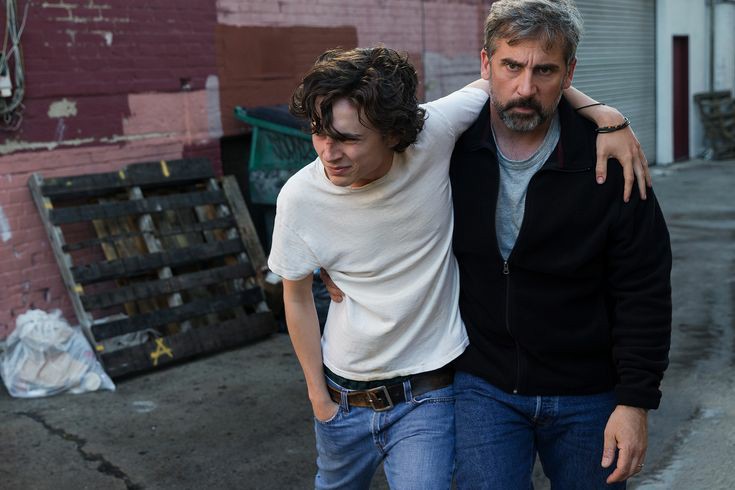
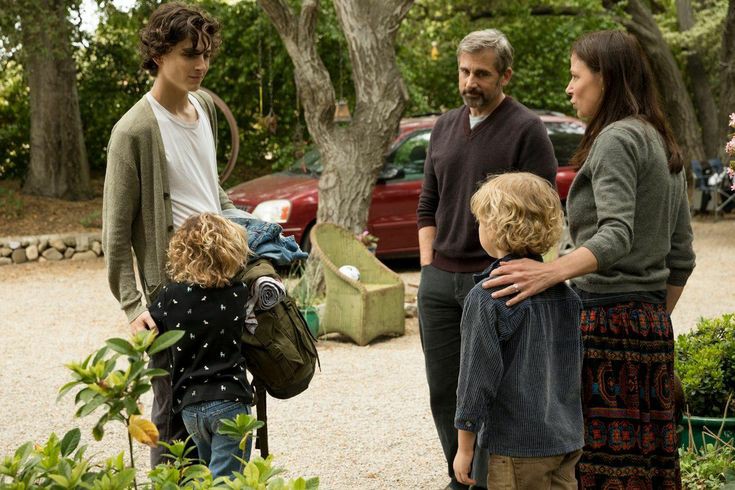
The film tells the story of a young boy Nic (Timothy Chalamet) and his gradual addiction to drug intake, pretty much all kinds. His relationship with his father David Sheff (Steve Carell) is the perspective through which the film looks at the aftermath of drug abuse and what it does to a family.
It is probably the first time I saw Steve Carell in such a serious role, considering his role of a suicidal homosexual in Little Miss Sunshine too. The film in terms of treatment gets too teal and gut wrenching and just wants you to feel the pain and/or potential pain of dealing with this problem.
The portrayal is so real, it feels humanly impossible. Every viewer will personally relate to it even if they haven’t ever been a part of any circle that is dealing with the consequences of this problem. The film doesn’t just show drug abuse as an external problem. It makes sure you place yourself into the shoes of David and try to analyze how you would deal with the problem, and no one likes to picture themselves this way, per se. Hence, the film can be too much for some.
What adds up to this melancholy is the background score. The music plays a big role in enhancing the mood of the film and not for a second feels comfortable, exactly how it should be. Interesting subplots are also in play, like Nic’s upbringing with David who is separated from his wife and Nic’s mother Vicki (Amy Ryan). The difference however is how these subplots are treated; not implied to be catalysts in the problem, but potential reasons why Nic could manage to stay clean, and yet somehow fell back into the pothole.
Timothy Shalamet as Nic is an apt choice and I’m definitely planning to explore more of his cinema.
Yes, the pace of this film is slow which sure might be symbolically reflective of the pace of life of a family stuck in this problem, but sometimes does feel lethargic, especially in the beginning.
Yes, to be honest I wasn’t ready for the weight of this film, but despite revolving around such a subject, the film doesn’t dramatize but humanizes instead.
The fact that Sense and Sensibility constituted as a film helming the feminist narrative, might not seem entirely true, today. But given the time it was made in and respecting the fact that it was adapted from a classic novel released even earlier, it seems pivotal to appreciate the intent behind it.
The appreciation doesn’t imply that the film in its entirety is just about it, but also means that it is necessary to address the breakthrough that followed up post the release of this film in the mid 1990s when cinema still wasn’t a strong ally in the feminist movement.
Sense and Sensibility holds importance in telling us the important efforts in filmmaking in the 90s that stood for breaking stereotypes through stories of love and acceptance
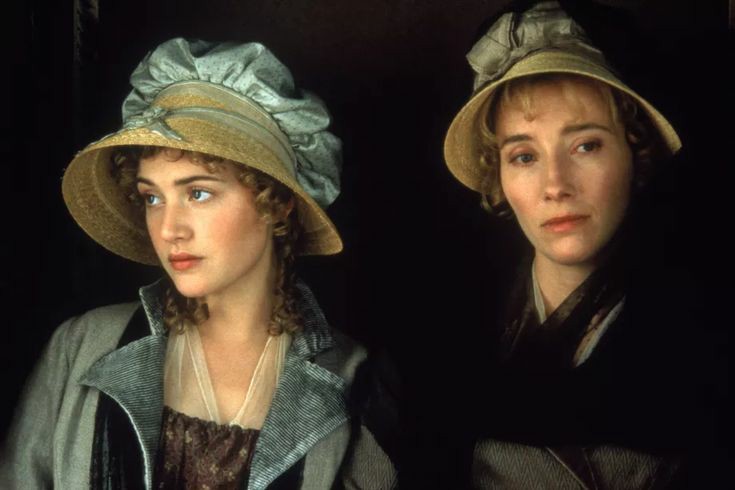
Sense and Sensibility is the film adaptation of Jane Austen’s timeless novel that has been celebrated ever since its inception and is the story of Elinor (Emma Thompson) and Marianne (Kate Winslet) whose father’s demise leaves everything for their step brother John, owing to the inheritance laws that leaned in favor of his gender. How then, do these sisters manage love, finances, and their emotions in a world that defines the conduct of a woman every step of the way, is what this film is all about.
Initial build ups made me perceive Marianne as bold and rebellious in her skin, much like Jane from Pride and Prejudice, but unlike her these qualities exist only in the face of love, and her desperate attempt to be loved sort of fades away her bold demeanor for me. Many a times, she gives in to the stereotypes she seeks to fight.
Love is not love which alters when it alteration finds, or bends with the remover to remove. Oh no! It’s an ever fixed mark that looks on tempests and is never shaken.
-Marianne Dashwood (Sense and Sensibility)
Kate Winslet as Marianne Dashwood
Emma Thompson as Elinor is breathtakingly modest and even though might seem a bit too much in order to fit the definition of the ideal lead actress, is charming and strong. But seeing her break down to love can be a bit disappointing to some.
Nevertheless, it is quite noteworthy that the perspective of this film maybe isn’t social commentary. It only narrates through the emotions of its key characters and given that, it is completely okay to celebrate love and all that comes with it.
Some peculiar anecdotes that highlight the life of a woman from the early 1800s, were Mr Willoughby’s refusal to marry Marriane because she didn’t accompany financial help or dowry, something women were measured with back then. It is of utmost irony that women back then were considered spiteful for wanting to earn but were also expected to bring in huge sums of money in matrimony, in order to be respected.
Talking about the use of colors, my most interesting find was the use of colour purple on Lucy’s dresses indicating how she craved luxury and wealth, probably why she ended up marrying Robert instead of Edward (Hugh Grant).
Additionally, through some other lens, yes director Ang Lee did do his best to make his male characters feminists. Today it might not count as enough, but in the mid 90s it paved way for the unpopular opinion of men as feminists.
Especially Alan Rickman as Colonel Brandon was quite free minded and understanding of the wants of women and how clinging them on to the shackles of society might not be the best idea.
Personally, instead of a man if a woman was shown to believe and perpetuate this idea, it would have been more empowering but given the time and the utmost liability to stay true to a novel originally published in 1811, this move was also pretty amazing.
Both Jane Austen and Ang Lee (who tried to enhance his male characters better and at the same time gave more space and character development to Marianne and Elinor), should be commended for their intent.
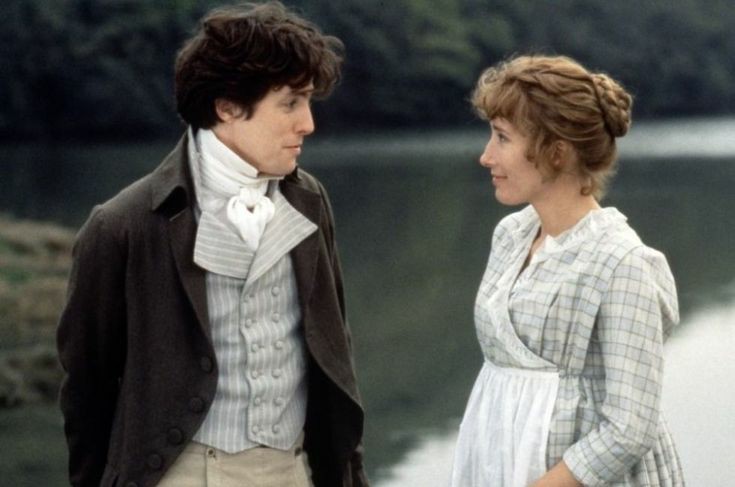
Emma Thompson and Hugh Grant as Elinor and Edward
Love in the backdrop of this story, however overused and sometimes over justified stereotypes, essentially played a big role in knitting the entire story together. I just hoped there wasn’t as much weight on men’s shoulders to make women happy and complete, as was given in this film. It was disheartening to see Elinor and Edward get back together, and her breaking down all her strength in a matter of seconds just to see a man return at his convenience.
But like real life, not all emotions are perfect, and judging the situation too much would also be an irony, because feminism is all about letting women choose.
Concluding, Sense and Sensibility was an important cinematic move but changing times can’t guarantee its affect to be as phenomenal.
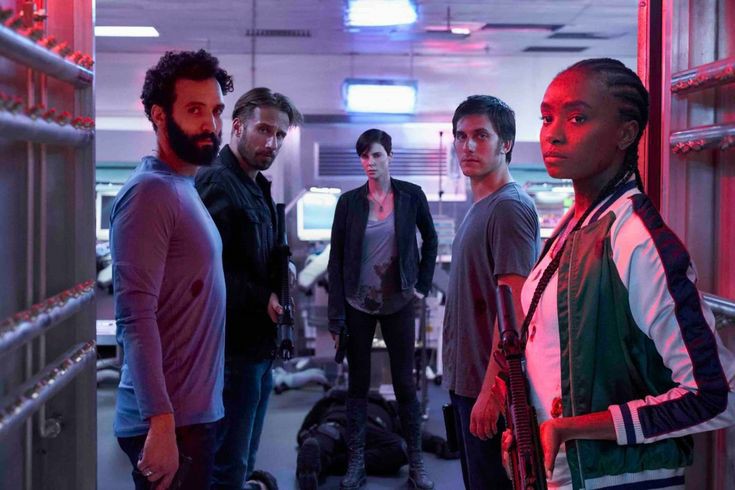
Based on a comic book of the same name, The Old Guard tells the story of five immortals led by Andy (Charlize Theron) who want to end every possible wrath on the world through their power to never die. Although their accomplishments aren’t quite mentioned except at the end, the power isn’t as badass as it sounds, or atleast isn’t portrayed justifiably.
Super impressive action scenes, with an average plot is the recipe of any commerical action film these days
Even entertainment wise, it doesn’t take pace until the second half. With most films, entertainment might not be a highlight point but this is not cinematic in its element. Considering it is aimed towards the masses, the catch doesn’t quite happen till the second half.
Their army of five include Nicky (Luca Marinelli) Joe (Marwan Kenzari), Booker (Matthias) and newly added Marine corp Nile (Kiki Layne) apart from Andy, who for most part reminisce their battle struggles to Nile or struggle to convince her of the possibility of something good coming out of this glitch.
Other than that, the film has pumped up action sequences (mostly in the climax) that mostly have Theron and Layne leading them.
The key takeaway for me would be how potently human greed is portrayed here, through Merrick (Harry Melling) who wants the army’s DNA in order to benefit himself as an innovator and out do his competitors in the market.
Some subplots that were initially introduced were later left midway. Narratives like saving Syrian lives, Nile being in the Marine Corps ceased to exist quite haphazardly, almost felt like why would the makers take the trouble to even run them in the first place.
Technically speaking, Andy’s human anatomy had no effect given she was alive as back as in the 10th century which seemed like a writing flaw.
Another major reason why this failed to leave an impact was the absence of a strong challenge. Merrick as the villian wasn’t as villianish as he was childish.
Quynh’s ordeal was one of my favorite scenes from the film, and I eagerly waited for a follow up on it, which will thankfully be served in the second part, sure indications to which were made in the climax. Overall, the film is a good watch mostly for the second half but has quite the potential to fix up in its sequel.
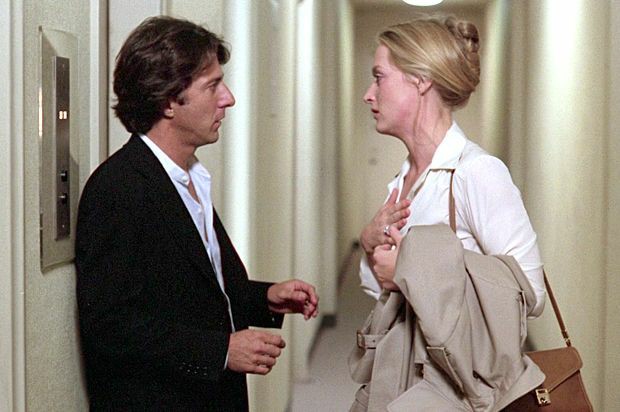
Ordeal lies in the root of Kramer Vs Kramer, because this Academy Award winning film doesn’t even have a dignified opening ‘sequence’ of sorts, which is quite rare to see in a film shined on by the likes of Meryl Streep and Dustin Hoffman, but which also turns out to be a meticulous technique to signify how deeply connected is it to real life, that doesn’t ever specify when it will fall apart.
Dustin Hoffman and Meryl Streep in a sequence from Kramer vs Kramer
Kramer vs Kramer as the name suggests, is the story of a legal custody battle between Ted Kramer (Hoffman) and Joanna Kramer (Streep) who long for happiness and solace, which they both look for in their little boy Billy.
The film is quite ahead of its time, because it doesn’t use stereotypical narratives like domestic abuse, adultery or constant fights to justify a couple splitting up. Nor does it use other kinds of stereotypes like mutual consensus. Instead, the couple breaks up through the standpoint of the wife who seeks independence and love, and more than blame it all on her better half, states that she needs to find herself and seek respect from within, something I surely wouldn’t see in films from the 70s. That doesn’t mean though, that the film doesn’t get problematic as it unfolds. But what my outtake would recommend you is to try not to look at it through the feminist lens. Yes it might seem problematic and sexist too on many levels but custody battles seldom leave out any form of disgust. So yes there is anti feminism but the director shamelessly comes out with it because otherwise he can’t show the truth. It’s not glorification. It’s facts.
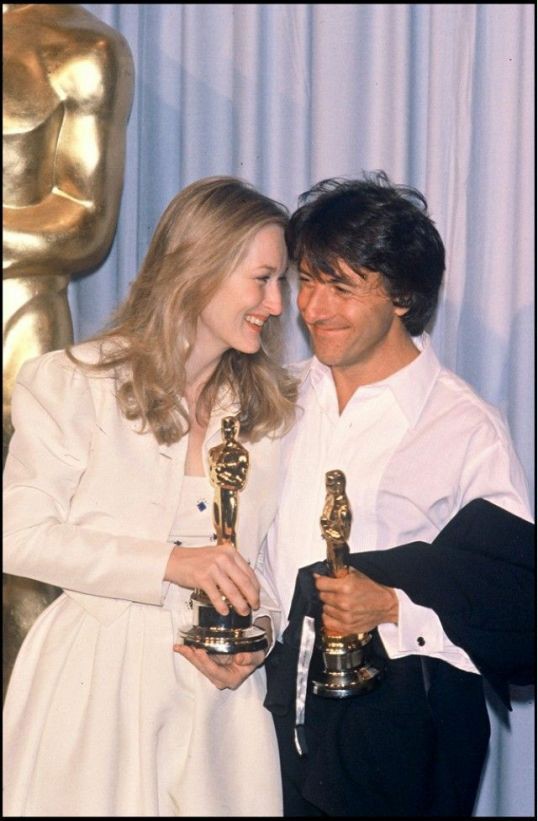
Dustin Hoffman is beautiful and so human as Ted, who isn’t apologetic when he needs to be, but subconsciously tries to mend things any which way he can. The Graduate surely isn’t my favorite film of his now. It’s this. Precisely why he won the Academy Award for Best Actor for this film, alongside Meryl Streep who also won Best Supporting Actress. Stating the obvious, Streep like all of her roles plays Joanna to perfection. It’s hard to overlook her capabilities as an actor, as her performance is always timeless. She surely knows how to own the frame. She’s mostly present in the second half but dominates the entire film at large.
Hoffman and Streep upon receiving their respective Academy Awards for the film
There are series of points and counterpoints from every side leading you to believe that one is going to win or you are somehow to pick one side as the viewer. It’s only later that you realise it was never about right and wrong. It was about ill timings and ignorance that leads to a break in relationships. It is a very simple story if you come down to it but yet it feels complex and gut wrenching almost symbolically hinting at how gruesome real life can get.
There’s a lot you wish you could change but can’t. Some things, once they’re done can’t be undone
– Ted Kramer (Kramer vs Kramer)
Child actor Justin Henry as Billy is quite efficient in his portrayal of little kid trying to understand his parents getting separated and the gradual development of his relationship with Ted is amazingly poignant.
For sure, the film talks about gender roles and as stated above, the inability to take sides as a viewer is proof of how these roles defining parenthood are extremely problematic and unnecessary.
Another due applaud to the makers would be highlighting gender stereotypes through subtleties, like when Ted goes to attend Billy’s performance at school or when he goes to pick him up from a birthday party, all we see around him are women or mothers, and the only thing making Ted do all this is Joanna’s absence. This commentary on societal definitions of ‘normal’ is powerful.
Kramer vs Kramer is an important film at large, and even drives attention and interest right from the very beginning, but honestly, Joanna gets too apologetic, more than she should be. In that respect, the film does put across a wrong message even if it doesn’t intend to.



 The F Word