
It’s absolutely liberating in itself to see powerful female characters written and come to life. And what adds to this beauty are women directors penning down these roles and becoming sole in-charge of their representation. With an opulence of social subjects in films, but scarcity of the right people taking charge, Dolly Kitty aur woh Chamakte Sitare comes to the rescue.
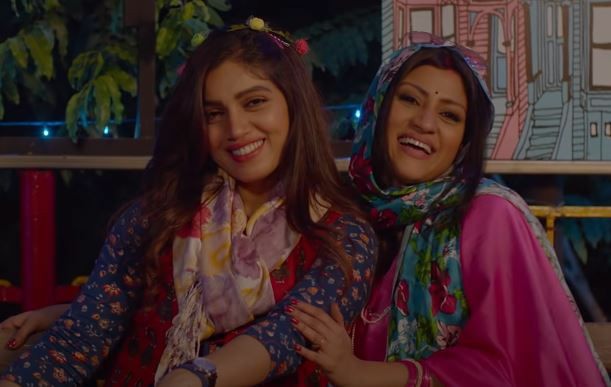
Set in Greater Noida, this film is the story of two cousins Dolly Yadav and Kajal Kumari who have starkly different lifestyles if looked at from afar, but share the same agony that womanhood often presents us all with. Dolly is a married woman whose sex life with her husband has been overtly inactive and a word like ‘thandi’ is used to denote her by him. What amuses as well as bewilders me is the ease with which she has accepted this label and how that speaks volumes about systemic oppression that makes us perceive sexism as normalcy. On the other hand, Kajal hails from Bihar and is new to the city in search of work. She works at a ‘call center’ where she’s required to please men to climax and other pleasures over the phone. Again, the representation deserves all the accolades because there isn’t any excuse to her profession except that it’s her choice. Both these women have peculiar, extremely subjective lives but women all around can relate to their unspoken ordeals. This is where Alankrita Srivastava wins.
As opposed to the picture painted by the trailer, the film isn’t just about sex and pleasure. In fact, it isn’t about it at all. Through Dolly and Kitty’s lives the screenplay highlights women’s need for companionship and acceptance. It explains why women shouldn’t be put through humiliation just for some ‘life lessons’, or as a package deal that comes with being female. There is no glorification of adultery in my opinion. Instead, it highlights how differently it costs men and women.
There’s no doubt that the ensemble carries a big weight here. Konkona Sen Sharma is inarguably a blessing to the Indian Film Industry and when it comes to acting and portrayals, I don’t think there’s anything she can’t do. Bhumi Pednekar does justice to her role and I can only imagine her wonder at being cast alongside Sen Sharma. Both of them play women who dream, of a better life. And seeing women support each other against patriarchy is what the world needs today, more than ever. Amol Parashar was probably the most maturely written character. As Osman Ansari, he is soft, poignant and kind. But he doesn’t lead. He doesn’t come to ‘rescue’ Dolly. He only stands there to hear her out.
There also are many other narratives the film tries to put in, like homophobia, anti-women politics, the taboo around public display of affection etc. But the only drawback here is that all of these get cluttered in the end, with some unnecessary shootings in the end for example, that don’t add to the existing plot.

 The F Word